
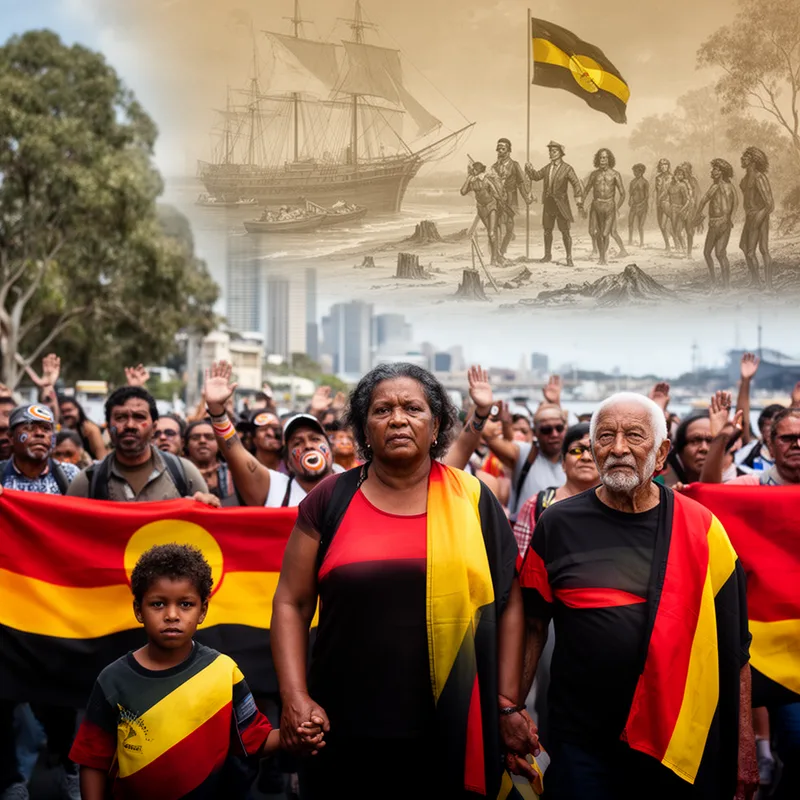
Invasion Day
- noun
- Australian
- Indigenous Australians observe Invasion Day as a time to reflect on the colonization of their land.
Examples
-
On Invasion Day, people hold ceremonies to honor the history and culture of Aboriginal communities in Australia.
-
Many activists gather every year to protest on Invasion Day and raise awareness about Indigenous rights.
-
For them, it remains Invasion Day.
Blog text (1)
Surface Forms
Morphology
The compound combines 'invasion' (a large-scale entry) with 'day' (a commemorative date), so a B1 learner who knows both words can infer it denotes a day marking an invasion. The specific historical and political connotations (e.g., Indigenous Australian protests and the link to colonization) go beyond the literal composition and would require extra background knowledge, but the core referential meaning is transparent.
Etymology
Invasion Day comes from the way many Indigenous Australians see the arrival of European settlers: they call it an invasion because people came, took land and changed lives. That's why people use Invasion Day instead of 'Australia Day' to protest and to remember the harm done.

