
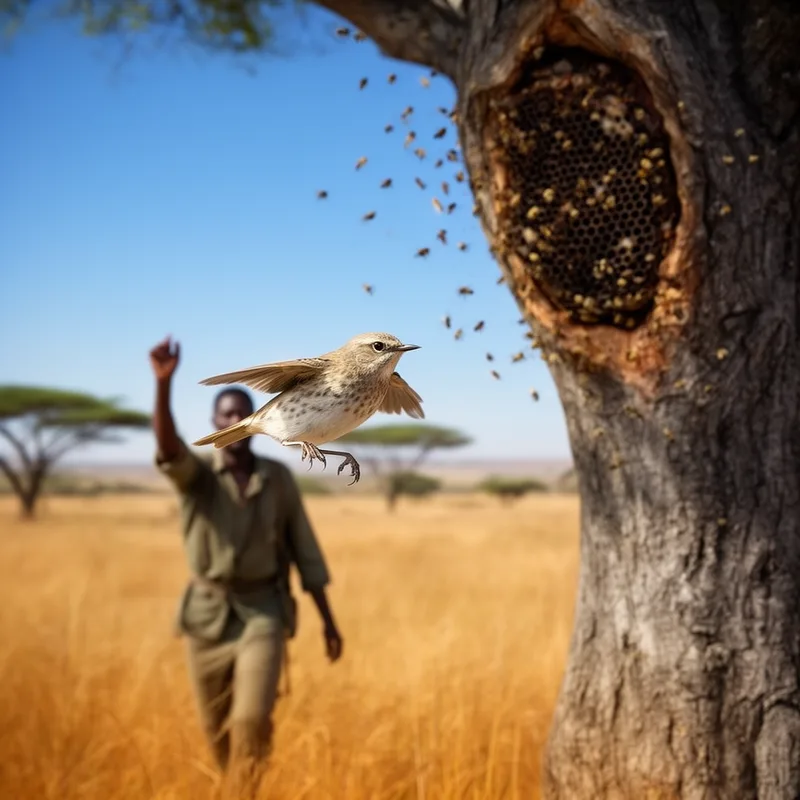
Indicatoridae
- noun
- /ˌɪndɪˈkeɪtəˌriːdeɪ/
- Specialized
- Members of the Indicatoridae family are noted for their unusual behavior of guiding animals to bee nests.
Examples
-
The Indicatoridae family includes birds that guide humans to honey.
-
The Indicatoridae are native to sub-Saharan Africa and parts of Asia.
-
Ornithologists have long studied the cooperative behavior exhibited by Indicatoridae species.
-
Many people admire the Indicatoridae for their unique behavior.
-
Bird watchers often seek out Indicatoridae because these birds can lead them to hidden beehives.
-
The Indicatoridae family plays a crucial role in the ecosystem by helping animals find food.
-
In some cultures, people believe that following an Indicatoridae bird will lead them to sweet honey.
Synonyms


 1
9.6
A small African and Asian bird that eats honey and wax from bees and leads people to bee nests
Surface Forms
Morphology
Etymology
Indicatoridae starts with indicator, meaning 'one who points out', and ends with -idae, a common ending that marks an animal 'family'. These birds are called honeyguides because they lead people or animals to beehives, so the name fits their habit of 'pointing out' where the bees are.