
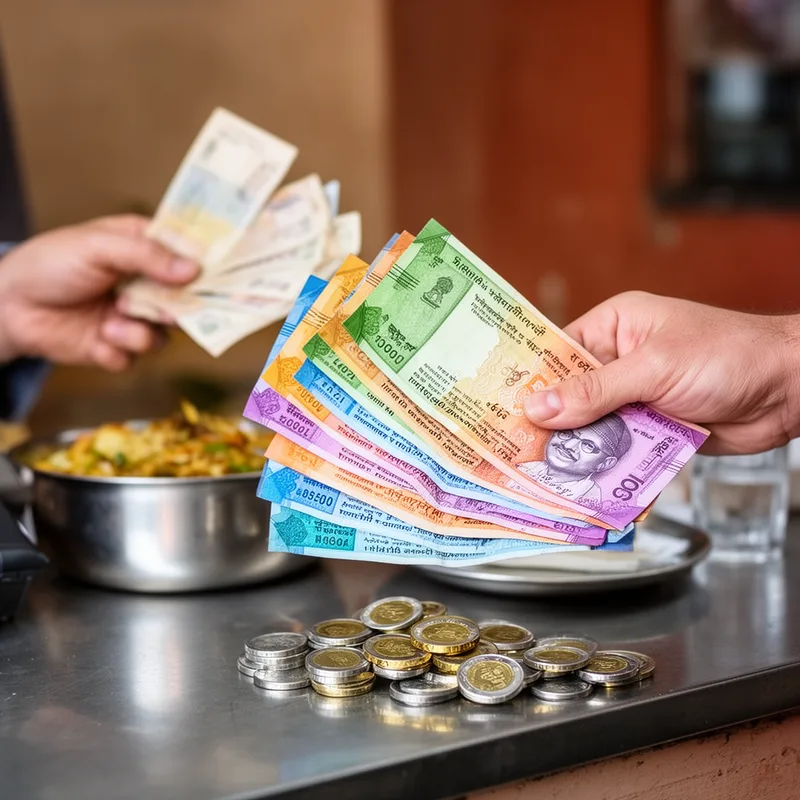
Indian rupee
- noun
- /ˈɪndiən ruˈpi/
- Indian
- A 1995 World Bank study estimated that the annual health costs of ambient air pollution in Delhi alone were on the order of 3.5-14 billion Indian rupees (Rs.), or approximately US$100-400 million.
Examples
-
Take one prominent example: The 10 percent appreciation of the Indian rupee against the U.S. dollar in early 2007 contributed to a large percent increase in China's exports to India over the course of 2007.
Academic text (2008) -
The price of the smartphone dropped to 10,000 Indian rupees last week.
-
After exchanging my dollars, I had 5,000 Indian rupees in my wallet.
-
Many goods in India are priced in Indian rupees, which makes budgeting easier for locals.
Synonyms

 17
3.1
17
3.1

A unit of money used in countries such as India and Pakistan
Surface Forms
Morphology
The meaning 'the official currency of India' is directly and compositionally derived from 'Indian' (pertaining to India) + 'rupee' (a unit of currency). This adjective+noun pattern indicating origin/possession is a basic, cross-linguistically common construction, so a B1 learner who knows both constituents will readily understand the MWE.
Etymology
Indian rupee comes from the old word rupiya, which meant 'stamped silver' — a silver coin marked with a ruler's seal. Long ago rulers used these silver coins, so the word stayed as the name for India's money today.