
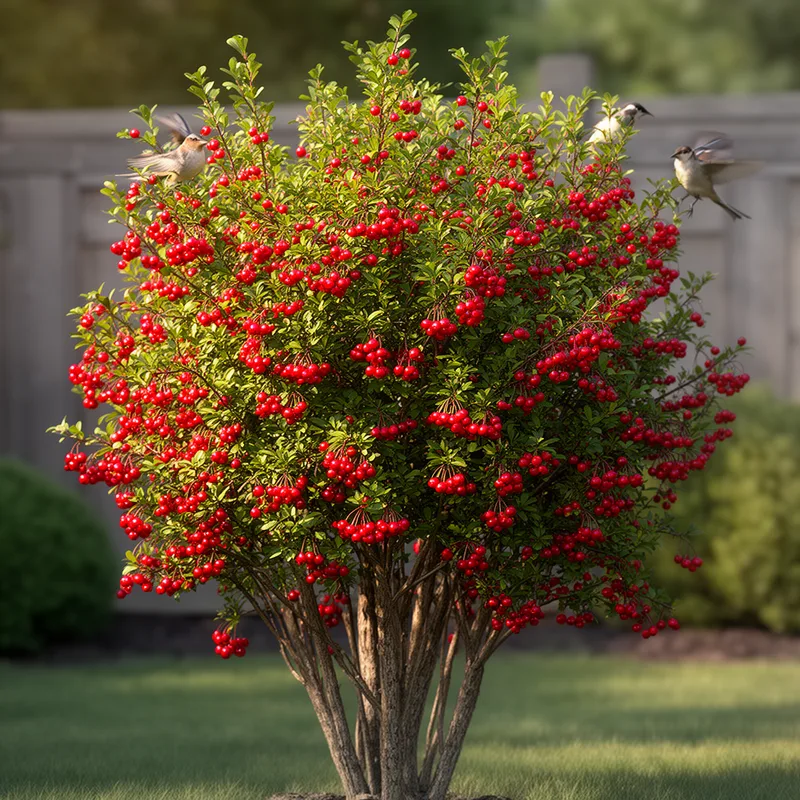
Indian currant
- noun
- /ˈɪndiən ˈkɜrənt/
- US
- The garden was bordered by a row of Indian currant shrubs, each laden with bright red berries.
Examples
-
She planted an Indian currant to attract birds and add color to her backyard in autumn.
-
The Indian currant produces beautiful red berries.
-
Many native plant enthusiasts recommend Indian currant for its ornamental value and resilience.
-
Have you seen the Indian currants in the garden?
-
The garden was bordered by a row of Indian currant shrubs, each laden with bright red berries.
-
She planted an Indian currant to attract birds and add color to her backyard in autumn.
-
Many native plant enthusiasts recommend Indian currant for its ornamental value and resilience.
Synonyms

A small North American bush with many coral red berries that birds eat in autumn

A small bush that produces clusters of bright red berries
Surface Forms
Morphology
The noun is a straightforward adjective + noun combination: 'Indian' modifies 'currant', so a learner who knows both words can infer it denotes a type of currant associated with Indigenous/American origin and thus a shrub with currant-like berries. While the precise botanical species name is specialized, the basic referential meaning is directly compositional and follows common cross-linguistic modifier+head patterns, making it immediately understandable to learners who know the constituents.
Etymology
The name Indian currant likely comes from early settlers who saw Native Americans use the shrub and its bright red berries. They thought the berries looked like European currants, so the plant became known as Indian currant.

