

Indian blanket
- noun
- /ˈɪndiən ˈblæŋkɪt/
- US
- We planted Indian blanket in our garden to attract butterflies and bees.
Examples
-
The fields were bright with blooming Indian blanket in the summer sun.
-
The Indian blanket blooms beautifully in the summer.
-
The Indian blanket is known for its vibrant yellow and red petals.
-
Many gardeners love the Indian blanket for its vibrant colors.
-
The garden was filled with vibrant Indian blanket flowers, their yellow petals shining in the sunlight.
-
Every spring, the Indian blanket blooms attract butterflies and bees to our backyard.
-
We admired the beauty of the Indian blanket as it painted the fields with splashes of yellow and red.
Synonyms
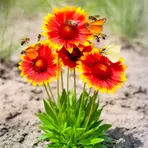
A plant that lives for one year with bright red and yellow flowers that attract bees and butterflies

A garden flower with long stems and yellow petals with red centers

A plant with tall stalks and bright yellow flowers with red or purple centers

A plant with bright yellow, red or purple flowers often grown in gardens
Surface Forms
Morphology
A B1 learner who knows 'Indian' and 'blanket' would most likely infer a textile or item associated with indigenous peoples, not an annual wildflower. The compound is a conventional plant name whose reference to a flower is based on cultural/naming history rather than transparent composition, so the meaning cannot be reliably derived from its parts.
Etymology
Indian blanket may come from the flower's look: its round head has a red center and yellow outer petals that remind people of a bright woven blanket made by Native American people, which explains the Indian part of the name. That's why the name is used for this colorful wildflower.

