
Incarnation
 3
9.5

- noun
- /ˌɪn.kɑːrˈneɪ.ʃən/
- Specialized
- In Christianity, the Incarnation refers to the union of divine and human nature in the person of Jesus.
- Incarnation of God
- mystery of the Incarnation
- Incarnation of Christ
Loading YouTube…
Watch on YouTubeCS Lewis has this wonderful the introduction to the to the to a book called on the Incarnation by Saint Athanasius.
- CS Lewis has this wonderful the introduction to the to the to a book called on the Incarnation by Saint Athanasius.
- He was united with a human form at the time of his incarnation on and born on Christmas of a virgin.
- And what Christians came to realize is that with the incarnation Christ in some ways is the answer to the second commandment.
- So he begins with this interesting word that gets translated here as incarnation by Miller.
- Well, we are talking about incarnation, as we've already seen in the previous paragraph.
- We represent Christ in the incarnation, you know, and that we represent the person of Christ and there is a mystery.
- So that's where I think humanism is profoundly influenced by the incarnation and just our notion of God is non competitive to us.
Examples
-
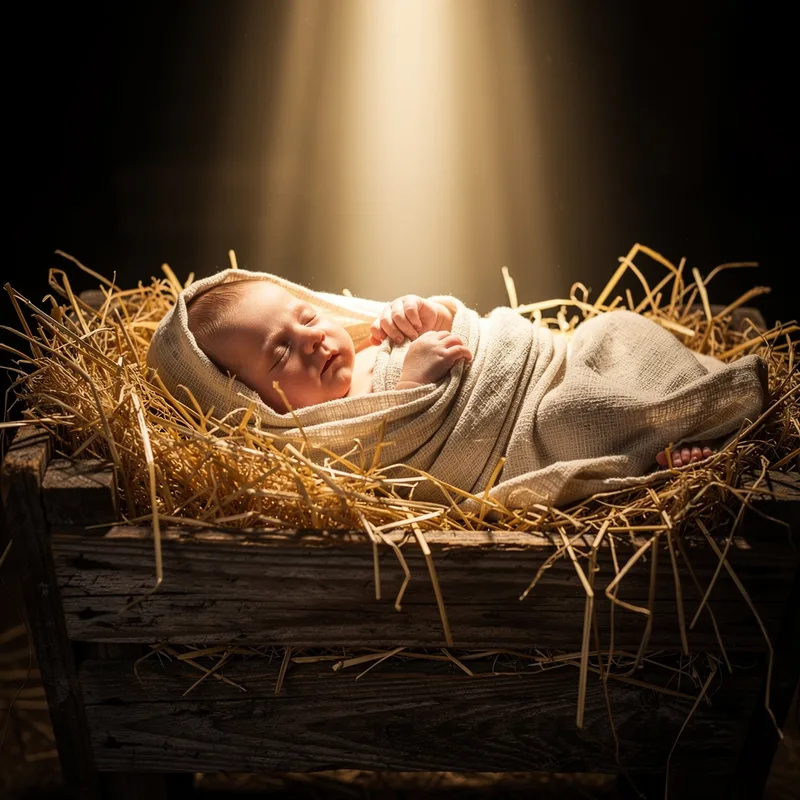
The Nativity is the scene of the Incarnation, that moment when the Word is made flesh Christmas morning.
-
Gregory argued that the Incarnation came precisely at the point when human evil had reached its limit.
Academic text (1993) -
By His incarnation, the Son of God has united Himself in some fashion with every person.
Academic text (2008) -
Because of this focus, sin is no longer the main reason why the Incarnation was necessary.
Academic text (1992) -
And what Christians came to realize is that with the incarnation Christ in some ways is the answer to the second commandment.
-
Hanuman is an incarnation of Shiva.
-
Most profoundly, the church is the space in which incarnation is preached and done.
Blog text (27) -
Even more mysterious, the Christian tradition asserts that through the mystery of the Incarnation, the Creator has united with creation.
Academic text (1995) -
Christians believe that the Incarnation is a key event in their faith, marking God's entry into human history.
-
The Incarnation symbolizes the moment when God took human form in Jesus Christ to save humanity.
Surface Forms
Morphology
Incarnation = incarnate (transparent) = incarn + ation
A standard noun formed from the verb 'incarnate' (to embody in flesh); learners who know 'incarnate' can derive the meaning.
Etymology
Incarnation comes from Latin parts in- meaning 'in' and carni meaning 'flesh', so it originally meant 'in the flesh'. You can see the same root in carnivore ('meat eater'), and this 'in the flesh' image explains why Incarnation means God becoming human.