
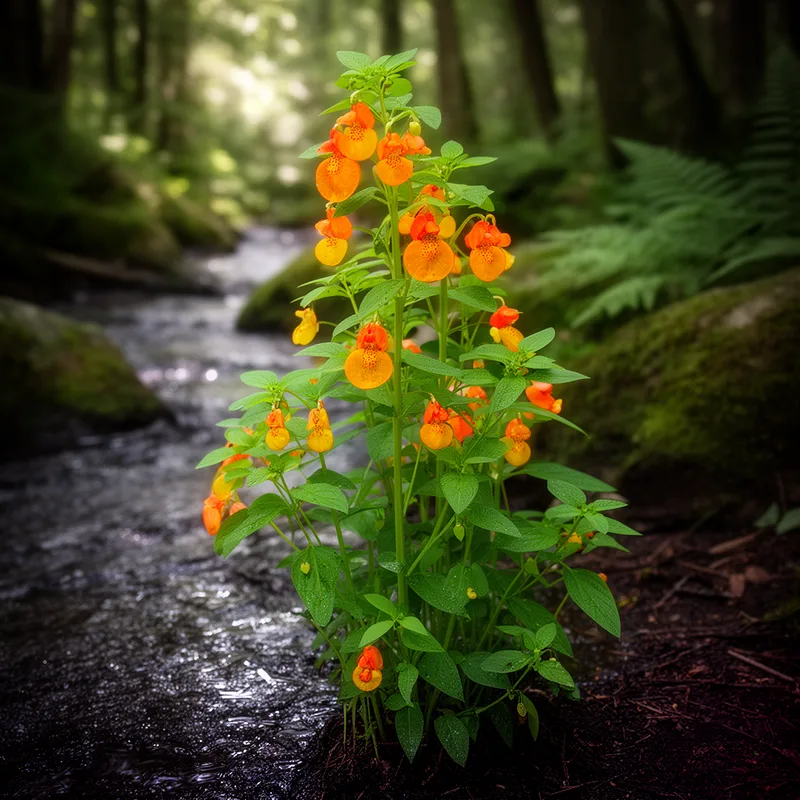
Impatiens capensis
- noun
- /ɪmˈpeɪʃənz kəˈpɛn.sɪs/
- Specialized
- The bright orange flowers of Impatiens capensis attract hummingbirds each summer.
Examples
-
You can often find Impatiens capensis in shady, damp woodland areas along streams.
-
Gardeners appreciate Impatiens capensis for its ability to thrive in wet, acidic soil.
-
The Impatiens capensis blooms beautifully in late summer.
-
Have you seen the Impatiens capensis in the garden?
-
Gardeners appreciate Impatiens capensis for its ability to thrive in wet, acidic soil.
-
The bright orange flowers of Impatiens capensis attract hummingbirds each summer.
-
You can often find Impatiens capensis in shady, damp woodland areas along streams.
Synonyms


 1
9.1
1
9.1
A plant with bright orange or yellow flowers that grows in wet places and whose sap soothes itchy skin
 1
8.6
1
8.6
A plant with seed pods that burst when you touch them and release seeds
Surface Forms
Morphology
Impatiens + capensis
This is a taxonomic binomial: knowing 'Impatiens' (a genus of flowering plants) allows a learner to infer that the phrase names a particular species of Impatiens, but the species epithet 'capensis' is Latin and not transparently meaningful to a B1 learner. Scientific names are referential rather than compositional, so the full sense (common name, appearance, or distribution) is not derivable from the parts.
Etymology
Impatiens capensis is the scientific name for the plant often called jewelweed or spotted touch-me-not. The bright, jewel-like flowers and the thin seed pods that burst when you touch them gave these names — the flowers look like small 'jewels' and the pods 'pop' if touched. So the name helps you remember the plant by its shiny flowers and popping seed pods.