
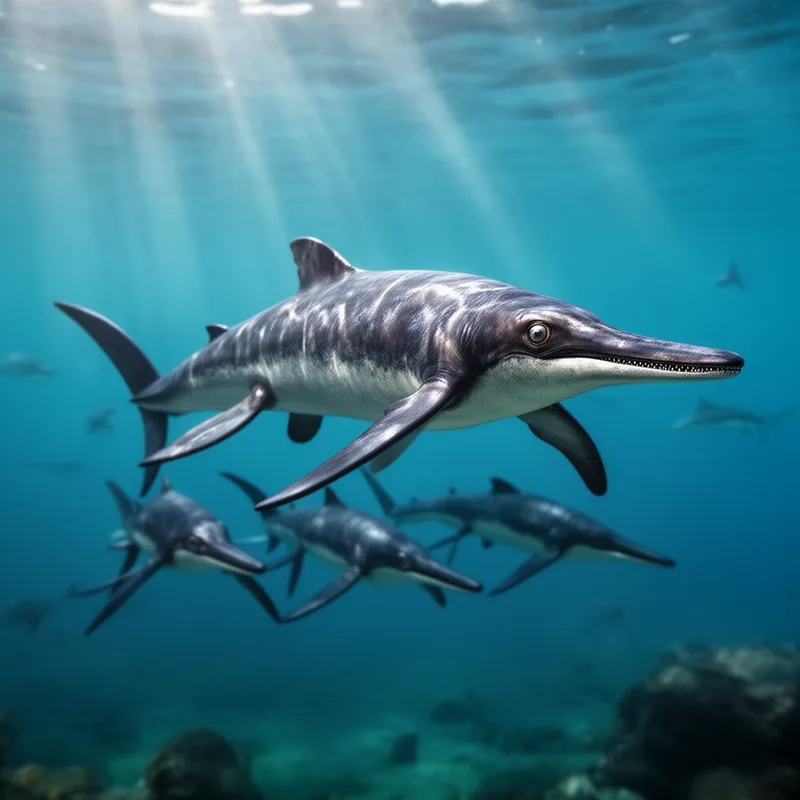
Ichthyosauridae
- noun
- /ɪkˌθiːoʊˈsɔːrɪdeɪ/
- Specialized
- The Ichthyosauridae thrived during the Jurassic and Cretaceous periods before going extinct.
Examples
-
Fossils of the Ichthyosauridae have been found on every continent.
-
The Ichthyosauridae family includes some of the largest marine reptiles.
-
Researchers believe that climate change played a role in the extinction of the Ichthyosauridae.
-
Many fossils of Ichthyosauridae have been discovered in Europe.
-
Fossils of the Ichthyosauridae family have been discovered on every continent, showcasing their widespread existence.
-
The Ichthyosauridae are known for their unique fish-like bodies, which helped them thrive in ancient oceans.
-
Researchers have studied the Ichthyosauridae to better understand the evolution of marine reptiles during the Jurassic period.
Surface Forms
Morphology
Ichthyosauridae = ichthyosaur (semi-transparent) = ichthyosaur + idae
Formed from the common name 'ichthyosaur' plus the specialized taxonomic suffix '-idae'; the relation to the base is clear but the suffix denotes a technical biological category unfamiliar to average learners.
Etymology
Ichthyosauridae comes from Greek roots ichthys 'fish' and saurus 'lizard', and the ending -idae means 'family'. So the name literally says 'fish lizards', which fits these extinct sea reptiles with fish-like bodies.

