
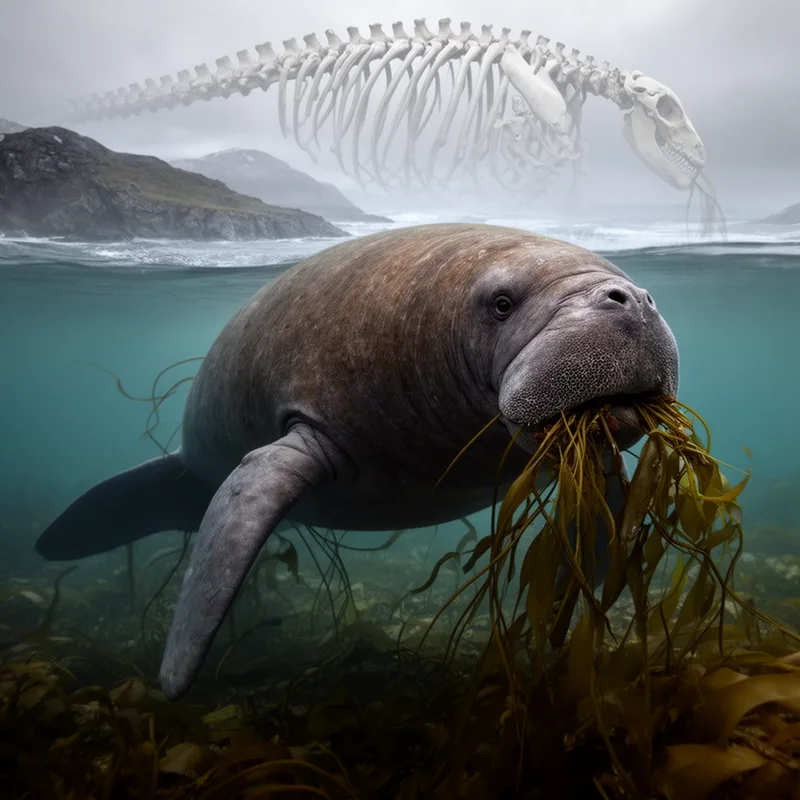
Hydrodamalis gigas
- noun
- Specialized
- The extinction of Hydrodamalis gigas is considered one of the earliest documented cases of human-caused marine extinction.
Examples
-
Unlike other sirenians, Hydrodamalis gigas had no true teeth, only keratinous plates for feeding on kelp.
-
Researchers discovered bones belonging to Hydrodamalis gigas on a remote Bering Sea island.
-
The Hydrodamalis gigas was a massive marine mammal.
-
Did you know that Hydrodamalis gigas was once abundant in the Bering Sea?
-
Researchers discovered bones belonging to Hydrodamalis gigas on a remote Bering Sea island.
-
The extinction of Hydrodamalis gigas is considered one of the earliest documented cases of human-caused marine extinction.
-
Unlike other sirenians, Hydrodamalis gigas had no true teeth, only keratinous plates for feeding on kelp.
Synonyms
A very large extinct sea animal that lived near the Bering Sea
Surface Forms
Morphology
Hydrodamalis + gigas
This is a taxonomic binomial combining the genus name Hydrodamalis (large, extinct marine mammals related to dugongs) with the epithet gigas, which is a common Latin/Greek root meaning 'giant'. Because the name is compositional (genus + descriptive epithet) and not idiomatic, a learner who knows both constituent meanings can infer it denotes a very large Hydrodamalis (Steller's sea cow).
Etymology
Hydrodamalis gigas comes from Greek word parts that make a clear picture: hydro means 'water' and gigas means 'giant', so the name literally means 'giant water animal'. That's why it is the name for the huge, now extinct 'Steller's sea cow'.

