
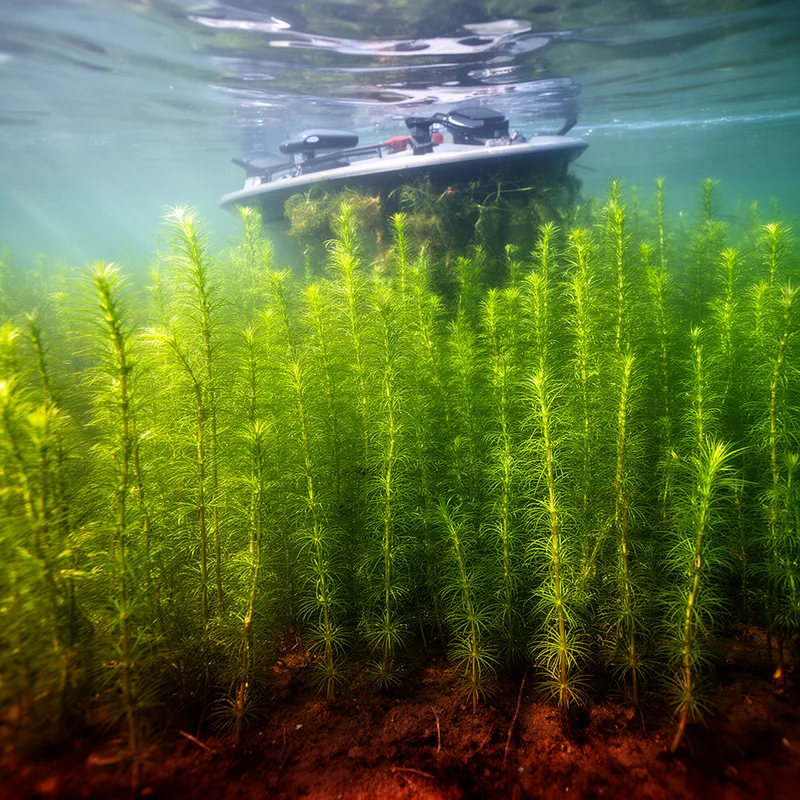
Hydrilla verticillata
- noun
- Specialized
- Hydrilla verticillata has spread rapidly in Florida, clogging many waterways and disrupting native ecosystems.
Examples
-
Scientists are studying ways to control the growth of Hydrilla verticillata in lakes and rivers.
-
Because Hydrilla verticillata reproduces quickly, it is considered one of the most problematic aquatic weeds.
-
The Hydrilla verticillata can grow rapidly in freshwater lakes.
-
Many fishermen complain about Hydrilla verticillata clogging their nets.
-
Hydrilla verticillata has become a significant invasive species in the southern United States, causing problems for local fish populations.
-
Hydrilla verticillata is known for its ability to outcompete native plants, leading to serious ecological issues in aquatic habitats.
-
Hydrilla verticillata can quickly form dense mats on the surface of lakes, which blocks sunlight and disrupts underwater ecosystems.
Synonyms


 1
9.9
A water plant that grows underwater and often clogs lakes and rivers
Surface Forms
Morphology
hydrilla + verticillata
This is a scientific Latin binomial where 'hydrilla' identifies the plant and 'verticillata' is a Latin adjectival descriptor (from verticillate = 'having whorls'), so the species name is compositionally built from a noun + descriptive element. However, the second constituent is not an English lexical item and is unlikely to be known by an average B1 learner, so understanding the specific sense depends on specialized/botanical or Latin knowledge rather than general vocabulary.
Etymology
Hydrilla verticillata may come from the old Greek word hydor meaning 'water' and the Latin word verticillata meaning 'in a ring'. The plant lives in water and its leaves grow in rings around the stem, so the name points to a 'water' plant with circular leaf groups.