
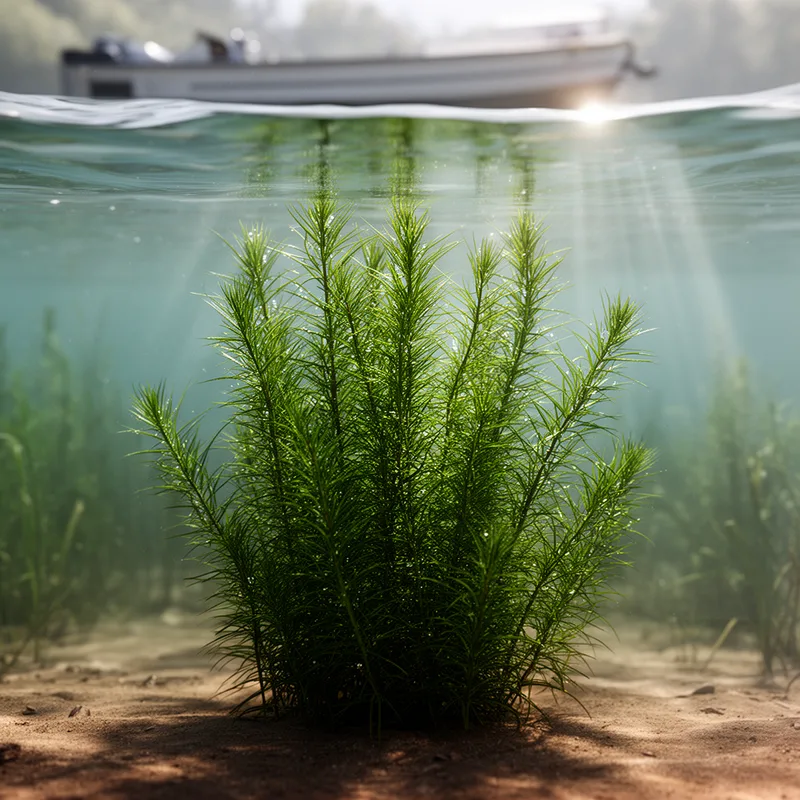
Hydrilla


 1
9.7
- noun
- /haɪˈdrɪlə/
- Specialized
- In the South, for example, hydrilla has choked many lakes and rivers, covering traditional waterfowl foods.
- resistant hydrilla
Examples
-
The invasive plant known as hydrilla, Hydrilla verticillata, is sometimes called the perfect aquatic weed because of its reproductive adaptability.
Academic text (2005) -
Since its introduction into the United States from Southeast Asia in the 1950s near Tampa, Florida, hydrilla has clogged waterways throughout the southeastern United States.
Academic text (2005) -
The bottom line is that resistant hydrilla can spread quickly.
Academic text (2005) -
These include monitoring lakes regularly to keep the spread of resistant hydrilla in check.
Academic text (2005) -
Now it appears that some hydrilla is becoming resistant to the herbicide that has been most effective against it.
Academic text (2005) -
Meanwhile, concerns over the resistant hydrilla persist.
Academic text (2005) -
This herbivorous fish can control hydrilla, but it often eats most of the native vegetation, too.
Academic text (2005) -
Rooted in bottom sediments, hydrilla grows long, thin stems that rapidly reach the water's surface and form a thick mat.
Academic text (2005) -
The invasive plant known as hydrilla, Hydrilla verticillata, is sometimes called the perfect aquatic weed because of its reproductive adaptability.
-
Rooted in bottom sediments, hydrilla grows long, thin stems that rapidly reach the water's surface and form a thick mat.
Compounds
- Specialized
A water plant with narrow leaves in rings that grows fast and clogs lakes and rivers
Surface Forms
Etymology
Hydrilla comes from the Greek root hydor (seen in hydro-) meaning 'water' and the small ending -illa meaning 'little'. So Hydrilla points to a 'little water' plant, which helps you remember it is an aquatic plant that grows in lakes and rivers.