
Hydrangea paniculata
- noun
- Specialized
- Many new cultivars of Hydrangea paniculata offer improved colors and extended flowering periods.
Examples
-
Gardeners appreciate Hydrangea paniculata for its large, showy flower heads that bloom in late summer.
-
The Hydrangea paniculata blooms beautifully in late summer.
-
Hydrangea paniculata thrives in full sun and is often used as a specimen plant in gardens.
-
I planted several Hydrangea paniculatas in my garden.
-
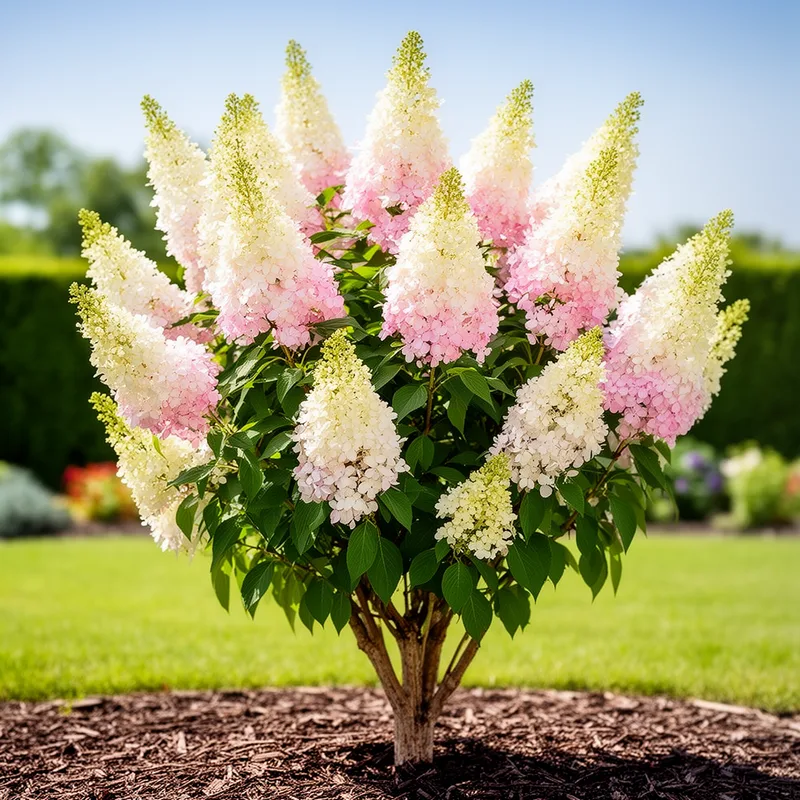
The beautiful Hydrangea paniculata creates stunning displays of white flowers in the summer garden.
-
Gardeners often choose Hydrangea paniculata for its ability to thrive in various soil conditions.
-
In the fall, the blooms of Hydrangea paniculata change to a lovely shade of pink, adding color to the landscape.
Synonyms

A bush that loses its leaves and has large cone-shaped flowers in fall
Surface Forms
Morphology
Hydrangea + paniculata
This is a Latin binomial combining the common noun 'Hydrangea' with the epithet 'paniculata' (literally indicating 'having panicles' or panicle-like flower clusters). The overall meaning (a type of hydrangea characterized by panicle-shaped flower clusters) is compositional rather than idiomatic, but it relies on specialized/botanical knowledge of the Latin-derived term 'paniculata'/'panicle', so a typical B1 learner would not fully derive the precise sense without that background.
Etymology
Hydrangea paniculata gets its name from old words about its shape: Hydrangea comes from Greek words for 'water' and 'vase' because the seed pods look like tiny jars, and paniculata means 'many-branched clusters' because the flowers grow in a cone of small branches. That's why the name fits this shrub with jar-like seeds and pyramid-shaped flower heads.

