

Hydrangea macrophylla hortensis
- noun
- /haɪˈdreɪndʒə mækroʊˈfɪlə hɔrˈtɛnsɪs/
- Soil acidity can affect the color of Hydrangea macrophylla hortensis flowers, turning them pink or blue.
Examples
-
The Hydrangea macrophylla hortensis in her backyard blooms brilliant blue in summer.
-
Many gardeners prefer Hydrangea macrophylla hortensis for its vibrant colors.
-
Gardeners often choose Hydrangea macrophylla hortensis for its striking, long-lasting flower clusters.
-
The Hydrangea macrophylla hortensis blooms beautifully in summer.
-
Gardeners often choose Hydrangea macrophylla hortensis for its stunning, round-headed flower clusters that add vibrant colors to their gardens.
-
The blooms of Hydrangea macrophylla hortensis transition from green to pink or blue, creating a beautiful display throughout the summer.
-
In her garden, the Hydrangea macrophylla hortensis thrives, showcasing clusters of colorful flowers that attract butterflies.
Synonyms
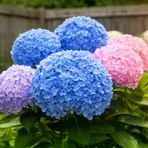
A hydrangea plant with large round flower clusters
Surface Forms
Morphology
hydrangea + macrophylla + hortensis
This is a compositional botanical name: 'hydrangea' names the shrub and the modifiers are Latin descriptors (macrophylla = large‑leaved; hortensis = of the garden), so a learner who knows each constituent can infer it refers to a garden variety of large‑leaved hydrangea. Although macrophylla and hortensis are Latin botanical terms that B1 learners often will not know, the meaning is directly derivable if those constituents are understood.
Etymology
Hydrangea macrophylla hortensis comes from words meaning 'water' and 'jar' because hydrangea refers to the seed pods that look like small jars, macrophylla means 'big leaves', and hortensis means 'from the garden'. So the name reminds us it is a garden shrub with large leaves and round flower clusters that like moist soil and can turn pink or blue.

