

Hoheria populnea
- noun
- New Zealand
- In spring, Hoheria populnea produces clusters of beautiful, paper-white flowers.
Examples
-
The bark of Hoheria populnea was traditionally used by the Māori for making ropes and textiles.
-
Gardeners in New Zealand often plant Hoheria populnea to attract bees with its fragrant blooms.
-
The Hoheria populnea tree blooms beautifully in the spring.
-
Many gardeners appreciate the Hoheria populnea for its fragrant flowers.
-
In spring, Hoheria populnea produces clusters of beautiful, paper-white flowers.
-
Gardeners in New Zealand often plant Hoheria populnea to attract bees with its fragrant blooms.
-
The bark of Hoheria populnea was traditionally used by the Māori for making ropes and textiles.
Synonyms
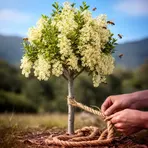
A small New Zealand tree with clusters of white flowers that smell like honey and bark used for making rope
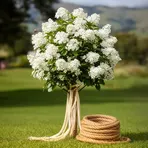
A small New Zealand tree with clusters of white flowers that smell sweet and bark used to make rope

A New Zealand tree with strong bark that people use to make cord and that has small white fragrant flowers
Surface Forms
Morphology
Hoheria + populnea
This is a Latin binomial (proper name) where the first element (Hoheria) signals the genus and thus gives a rough category (shrubs/small trees), but the second element (populnea) is not an English word and provides no transparent, compositional information to a B1 learner. Because one constituent yields a partial clue while the species-specific meaning (native to New Zealand, fragrant flowers, bark uses) cannot be derived from the parts, the expression is only partially transparent.
Etymology
Hoheria populnea may come from the Māori word 'houhere' for the plant, and the part populnea made people think the tree looked a bit like a 'poplar'. Māori people used the soft inner bark like ribbon and twisted it into strong rope, and the tree's white, fragrant flowers attract bees, so the name reminds us of its useful bark and pretty blooms today.

