

Hizbullah
 6
9.8
6
9.8

- noun
- /hɪzˈbʊlɑː/
- Literature
- How did Hizbullah defend itself against accusations that it was acting with bad intentions in Syria?
- Hizbullah guerrillas
- Hizbullah fighters
- Iranian Hizbullah
Examples
-
How did Hizbullah legitimize its authority to engage in a conflict outside Lebanese borders?
Academic text (2017) -
Thereafter, Hizbullah officials no longer hid their involvement in the Syrian Civil War.
Academic text (2017) -
Syria has been an important country for Hizbullah since the group's founding.
Academic text (2017) -
Since, according to Hizbullah, this did not happen, the group retained its military capability.
Academic text (2017) -
To persuade them, Hizbullah pointed to the potential costs of nonintervention.
Academic text (2017) -
However, on this subject, a significant issue is whether Hizbullah, as a non-state actor, has the right to act in Syria.
Academic text (2017) -
First, as a result of the decades-long conflict against Israel, Hizbullah fighters had acquired sufficient military experience.
Academic text (2017) -
In the early stages of the armed conflict in Syria, Hizbullah's participation was limited and less publicized.
Academic text (2017) -
The justness of Hizbullah's armed intervention in Syria has been fiercely debated.
Academic text (2017) -
Syria has been an important country for Hizbullah since the group's founding.
Synonyms
 102
8.2
102
8.2
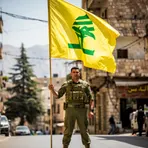
A Shia Muslim political and armed group in Lebanon with ties to Iran
 2
8.8
2
8.8
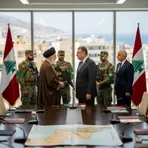
A Shia Muslim political and armed group in Lebanon with close ties to Iran
 1
9.2
1
9.2
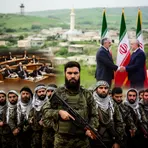
A Shiite Muslim political and armed group in Lebanon with strong ties to Iran

A Shia Muslim political and armed group in Lebanon with close ties to Iran
Surface Forms
Etymology
The word Hizbullah comes from Arabic parts: Hizb meaning 'party' or 'group' and Allah meaning 'God', so it literally means 'party of God'. That's why the name is used for a political and military group that says it acts for religious reasons.