

Hippoboscidae
- noun
- /ˌhɪpəˈbɒsɪˌdeɪ/
- Specialized
- Hippoboscidae are commonly found on sheep, birds, or other mammals, where they survive by feeding on blood.
Examples
-
Some members of the Hippoboscidae family have lost their wings through adaptation to a parasitic lifestyle.
-
Veterinary scientists often study Hippoboscidae to understand the diseases they can transmit to livestock.
-
The Hippoboscidae family includes several species of parasitic flies.
-
Birds often suffer from infestations of Hippoboscidae flies.
-
Many species of Hippoboscidae can be harmful to birds, as they feed on their blood and can transmit diseases.
-
The Hippoboscidae are often seen clinging to their hosts, where they can be observed feeding.
-
Farmers must regularly check their livestock for Hippoboscidae infestations that could affect their health.
Synonyms
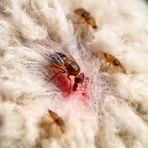
A small insect that sucks blood and lives in feathers or fur
Surface Forms
Morphology
Hippoboscidae = Hippobosca (opaque) = Hippobosca + idae
The formation uses a Latin taxonomic suffix and a genus name that are not familiar to average learners, so the meaning is not derivable from the parts.
Etymology
Hippoboscidae comes from Greek parts hippo- meaning 'horse' (the same 'hippo' in hippopotamus) and bosk- meaning 'to feed'. So it originally meant 'horse-feeders' and now names a family of bloodsucking flies that live on horses, birds, and other mammals.

