
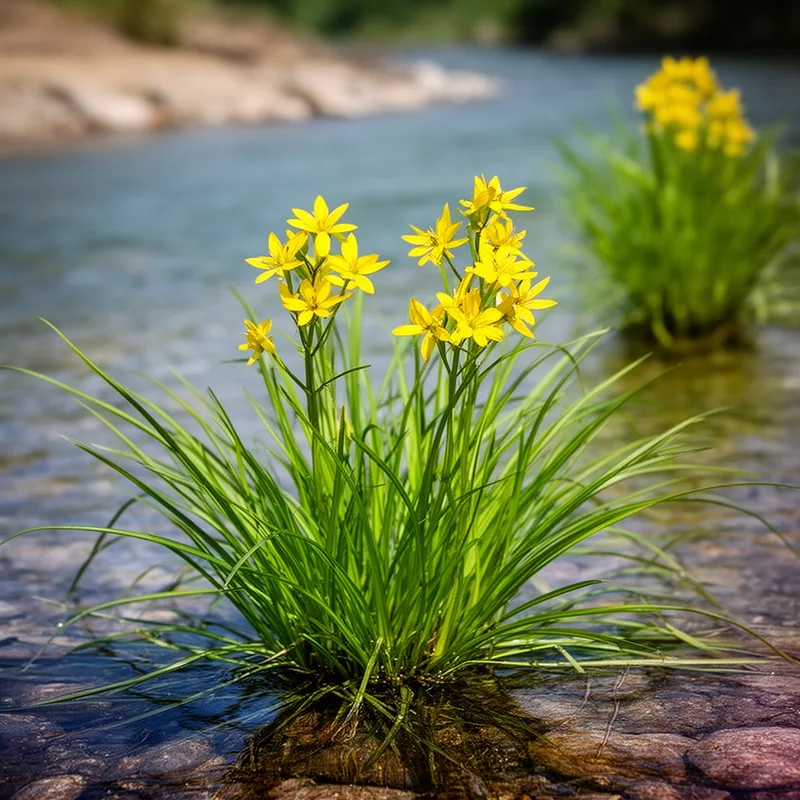
Heteranthera dubia
- noun
- Specialized
- Botanists identified the yellow blossoms as those of Heteranthera dubia.
Examples
-
Researchers have observed that Heteranthera dubia thrives in clean, slow-moving rivers.
-
The pond featured several clusters of Heteranthera dubia along the shoreline.
-
The Heteranthera dubia thrives in shallow waters.
-
Have you seen the Heteranthera dubia blooming in the pond?
-
The pond featured several clusters of Heteranthera dubia along the shoreline.
-
Researchers have observed that Heteranthera dubia thrives in clean, slow-moving rivers.
-
Have you seen the Heteranthera dubia blooming in the pond?
Synonyms
A water plant that grows in shallow water with grass-like leaves and small yellow star-shaped flowers

A water plant with long grass-like leaves and small yellow star-shaped flowers
Surface Forms
Morphology
Heteranthera + dubia
This is a scientific Latin binomial (genus + species) rather than a compositional English phrase. Knowing 'Heteranthera' might suggest a plant genus, and 'dubia' is not a common English word here, so a B1 learner who knows the constituents would not be able to derive the specific sense 'a North American aquatic plant with grass-like leaves and yellow star-shaped flowers'. The meaning is taxonomic and language-specific rather than transparently built from the parts.
Etymology
Heteranthera dubia comes from Greek and Latin words: heteranthera means 'different anthers' because the flowers have two kinds of male parts, and dubia means 'doubtful' because botanists were once unsure where to put the plant, so the name points to its odd flower parts and past confusion.

