
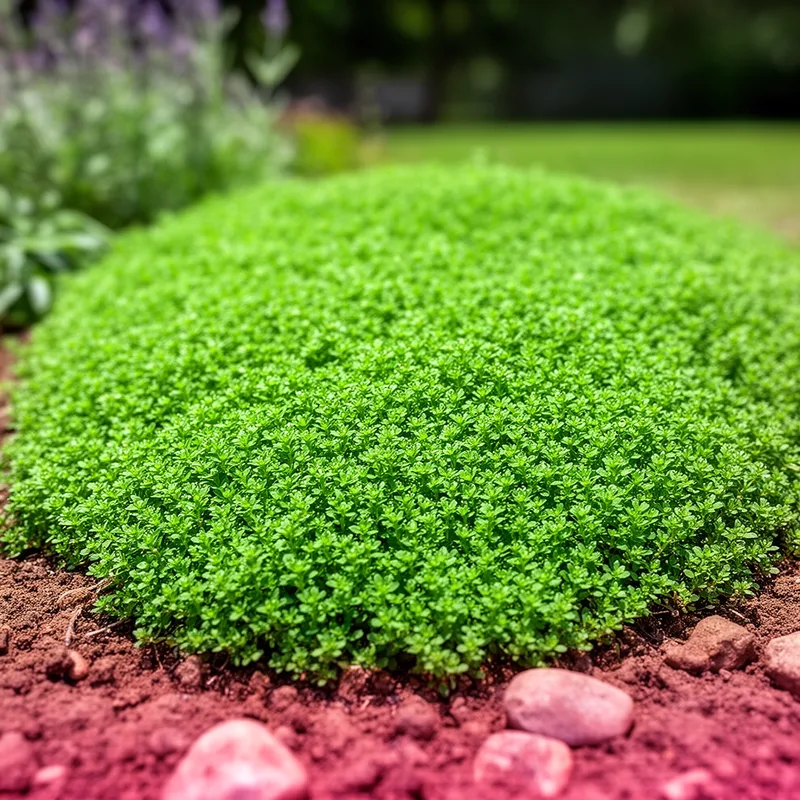
Hernaria glabra
- noun
- Specialized
- The gardener planted Hernaria glabra to create a dense, green carpet in the shaded areas of the lawn.
Examples
-
Many landscaping experts recommend Hernaria glabra as an alternative to traditional grass in challenging soils.
-
Historically, some believed that Hernaria glabra could help cure ruptures and other ailments.
-
The garden is filled with Hernaria glabra.
-
Many landscapers prefer Hernaria glabra for ground cover.
-
Many landscaping experts recommend Hernaria glabra as an excellent choice for ground cover due to its low height and ability to thrive in poor soils.
-
To enhance the flower bed, the gardener decided to plant Hernaria glabra for its lush green appearance.
-
Historically, some believed that Hernaria glabra had medicinal properties for treating ruptures and other health issues.
Synonyms
A low plant with small leaves that forms a green ground cover
Surface Forms
Morphology
Hernaria + glabra
This is a Linnaean binomial combining a genus name ('Hernaria' = a genus of herbs) with a specific epithet; a learner who knows both constituents (and that 'glabra' means 'smooth/hairless') would readily infer it names a particular species of Hernaria, likely with the described hairless characteristic. However, specific details such as its low-growing habit, native range, groundcover use and historical medicinal belief are not fully derivable from the parts, so the transparency is only partial.
Etymology
Hernaria glabra gets its name from an old belief that people used it to treat 'ruptures', or hernias. The first word, Hernaria, points to that healing idea and the second, glabra, means 'smooth', a hint at its hairless leaves, so the name links the plant's use and its look.

