
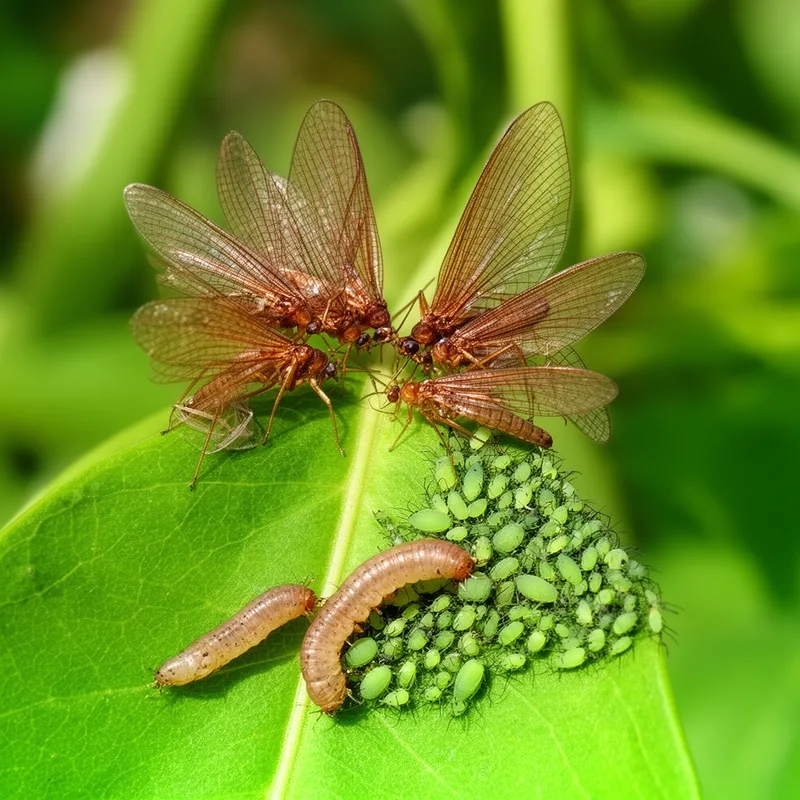
Hemerobiidae
- noun
- /ˌhɛmərəˈbaɪdiːə/
- Specialized
- Entomologists study Hemerobiidae to understand their role in biological pest control.
Examples
-
Members of Hemerobiidae can be distinguished from green lacewings by their coloring and wing structure.
-
Brown lacewings of the family Hemerobiidae are common predators of aphids in gardens.
-
The Hemerobiidae family includes many species of lacewings.
-
Have you ever seen a Hemerobiidae in your garden?
-
Brown lacewings of the family Hemerobiidae are common predators of aphids in gardens.
-
Entomologists study Hemerobiidae to understand their role in biological pest control.
-
Members of Hemerobiidae are characterized by delicate wings and are often found in temperate climates.
Synonyms
Small brown insects with thin, net-like wings that eat other small insects
Compounds
- Specialized
Small brown insects with thin, net-like wings that eat other small insects
Surface Forms
Morphology
Hemerobiidae = Hemerobius (opaque) = Hemerobius + idae
The word is formed by adding the specialized zoological family suffix '-idae' to the Latinized genus name 'Hemerobius'; this taxonomic formation is not transparently meaningful to average learners.
Etymology
Hemerobiidae comes from Greek parts hemero- 'day' and bios 'life', and you can see the bio part in biology. So the name literally means 'day-living', a useful image for remembering these small brown lacewings with delicate wings and larvae that hunt garden pests.

