
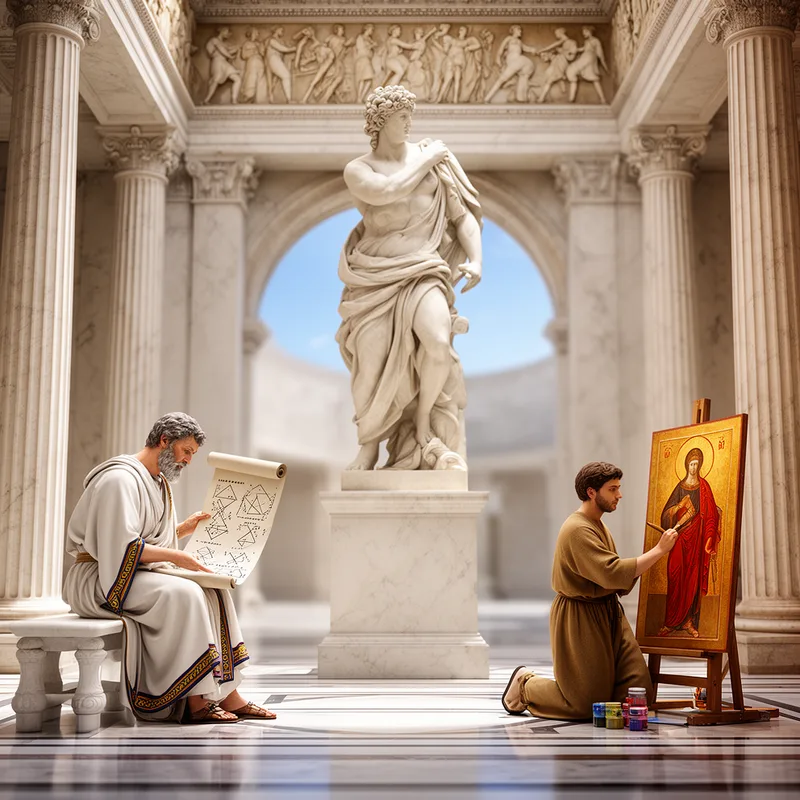
Hellenistical
- adjective
- /ˌhɛlɪˈnɪstɪkəl/
- The Hellenistical period was marked by the spread of Greek culture.
Examples
-
The architecture of the building drew heavily on Hellenistical principles and motifs.
-
He wrote several articles examining the Hellenistical elements in early Christian art.
-
Her Hellenistical studies focused particularly on the influence of Greek philosophy on Roman thinkers.
-
Many Hellenistical philosophers influenced modern thought.
-
The architecture of the building drew heavily on Hellenistical principles and motifs.
-
Her Hellenistical studies focused particularly on the influence of Greek philosophy on Roman thinkers.
-
He wrote several articles examining the Hellenistical elements in early Christian art.
Synonyms

 3
8.6
3
8.6

Relating to Greek culture and art after Alexander the Great

Relating to Alexander the Great or his empire
Surface Forms
Morphology
Hellenistical = Hellenistic (transparent) = hellen + istic + al
Formed by adding the suffix '-al' to the adjective 'Hellenistic'; the meaning is a straightforward adjectival variant and is directly related to the immediate base.
Etymology
Hellenistical comes from the Greek name Hellas, which means 'Greece' or 'the Greeks'. It refers to the time after Alexander the Great when Greek ideas and styles spread across many lands, so Hellenistical means 'like the Greek culture of that period'.