
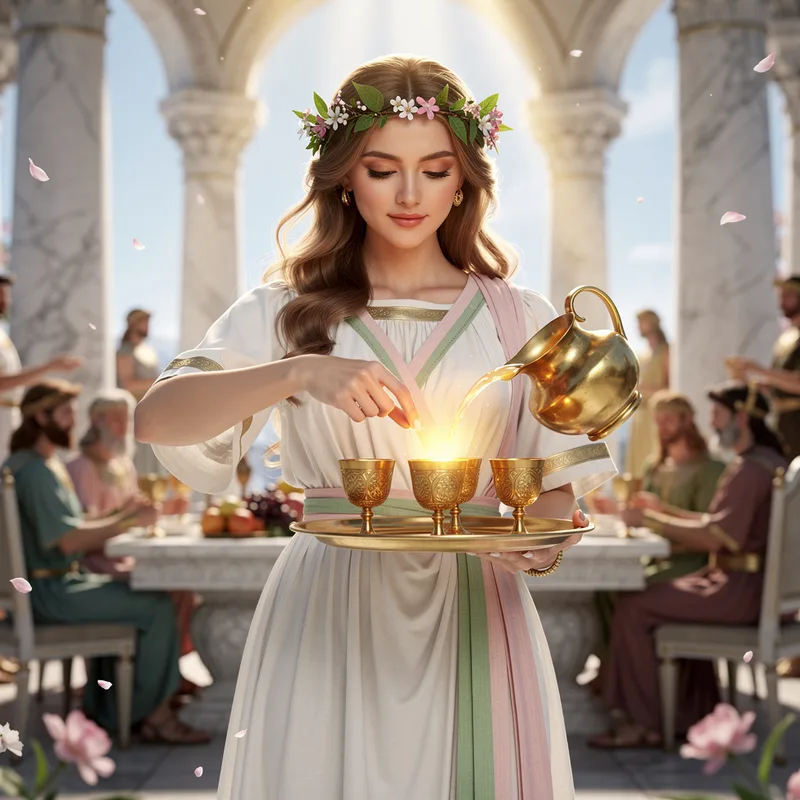
Hebe
 2
9.9

Greek goddess of youth and spring who serves drinks to the other gods
- proper noun
- /ˈhiːbi/
- Literature
:
Hebe
- The ancient Greeks honored Hebe in festivals celebrating youth and fertility, emphasizing her importance in their mythology.
Examples
-
Hebe, daughter of Zeus and Hera, was married to Hercules and represents the ideal of youthful beauty.
-
Chiron, you must not let on a thing to Hebe.
-
Chiron, give me news of Hebe!
-
Do you know of the engagement... between my brother lphicles and Hebe, Princess of Crete?
-
I apologize for the Prince... but he's about to consummate his marriage to Queen Hebe... the future wife of the next king of Tiryns!
-
In Greek mythology, Hebe is known as the goddess of youth and spring, serving as cupbearer to the Olympian gods.
Surface Forms
Hebe main
Etymology
The word Hebe comes from the ancient Greek name Hēbē, which means 'youth'. As the cupbearer who kept the gods young, her name helps us remember her link to 'youth' and 'renewal'.