
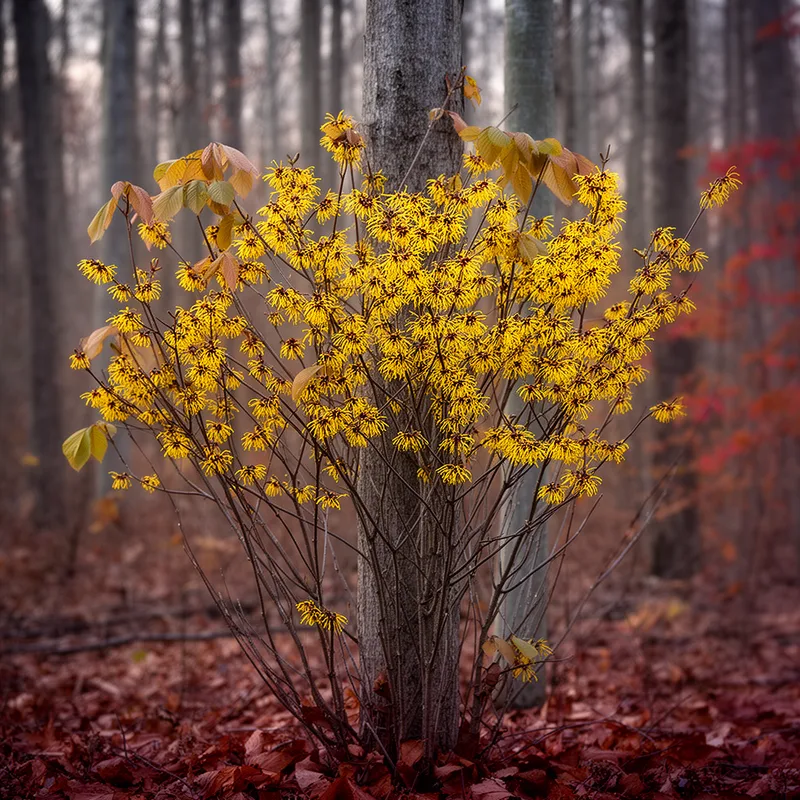
Hamamelis virginiana
- noun
- /ˌhæməˈmiːlɪs vɜrˈdʒɪniənə/
- Specialized
- Hamamelis virginiana is often cultivated in gardens for its ornamental yellow flowers in late autumn.
Examples
-
In the fall, the woods were brightened by the golden blossoms of Hamamelis virginiana.
-
The bark and leaves of Hamamelis virginiana have been used in traditional remedies for skin irritations.
-
The Hamamelis virginiana blooms in late autumn.
-
Many gardeners appreciate Hamamelis virginiana for its unique flowers.
-
Hamamelis virginiana is admired for its striking yellow flowers that bloom after the leaves fall in autumn.
-
Many people enjoy planting Hamamelis virginiana in their gardens to enjoy its beautiful flowers in the fall.
-
The small yellow blossoms of Hamamelis virginiana can often be seen decorating the landscape in late autumn.
Synonyms


 1
4.9
1
4.9
A small tree or shrub whose bark and leaves make a skin lotion
A common shrub from eastern North America that makes small yellow flowers after its leaves fall
Surface Forms
Morphology
This is a standard Linnaean binomial combining the genus 'Hamamelis' (witch hazel) with the species epithet 'virginiana' (denoting origin from Virginia). A learner who knows both constituents can readily infer it names the witch-hazel species from Virginia/eastern North America, so the meaning is compositional and transparent.
Etymology
Hamamelis virginiana may get its name from old Greek and from where it grows: Hamamelis may mean 'together with fruit', a note on the plant's odd way of flowering and fruiting at the same time, and virginiana means 'from Virginia'. That's why the scientific name points to both the plant's strange flowers and its American origin.