
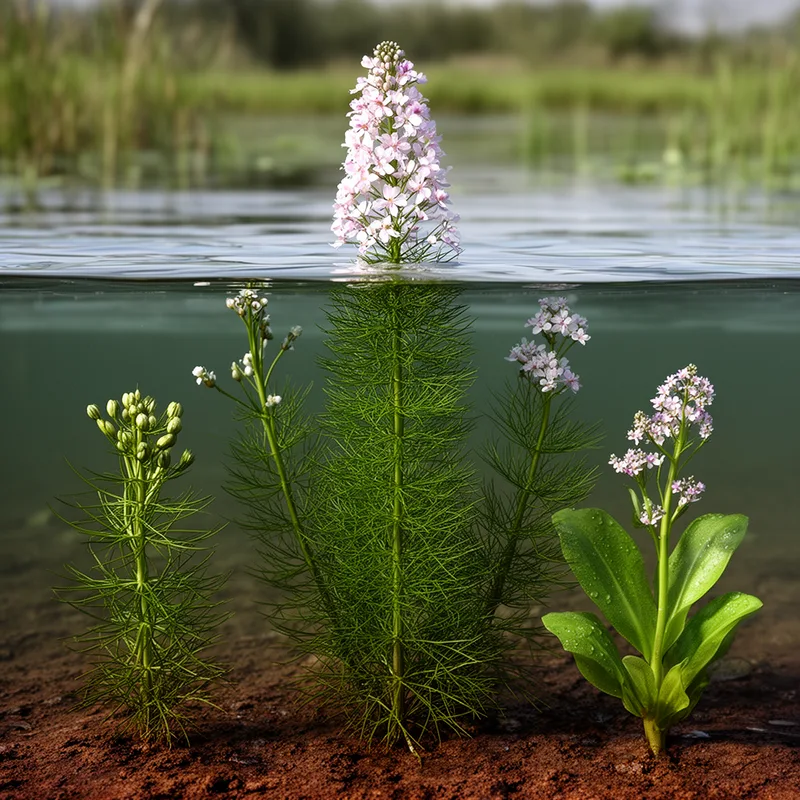
Haloragidaceae
- noun
- /ˌhæl.əˌrædʒ.ɪˈdeɪ.ʃiː/
- Specialized
- Members of the Haloragidaceae are often found in wetlands and shallow freshwater environments.
Examples
-
The Haloragidaceae family includes many aquatic and semi-aquatic plants found in various climates.
-
Botanists studied the distinctive floral structures of Haloragidaceae to better understand plant evolution.
-
The Haloragidaceae family includes various species of water plants.
-
Many species from the Haloragidaceae family thrive in freshwater environments.
-
Members of the Haloragidaceae family are often found in wetlands and shallow freshwater environments.
-
The Haloragidaceae family includes many aquatic and semi-aquatic plants found in various climates.
-
Many species from the Haloragidaceae family thrive in freshwater environments.
Synonyms
A group of water plants that live in or near freshwater
A family of flowering plants that live in water or marshes, like water milfoils
Surface Forms
Morphology
Haloragidaceae = Haloragis (opaque) = Haloragid + aceae
Formed by adding the specialized botanical family suffix '-aceae' to a Latinized genus stem; this taxonomic formation is domain-specific and not transparently meaningful to general learners.
Etymology
Haloragidaceae comes from the plant genus Haloragis, which begins with the Greek part halo- meaning 'sea' or 'salt', a helpful clue that many of these plants live in water. The ending -aceae marks a plant 'family', as in Rosaceae the 'rose family', so Haloragidaceae simply names the family of water milfoil and other aquatic plants.

