
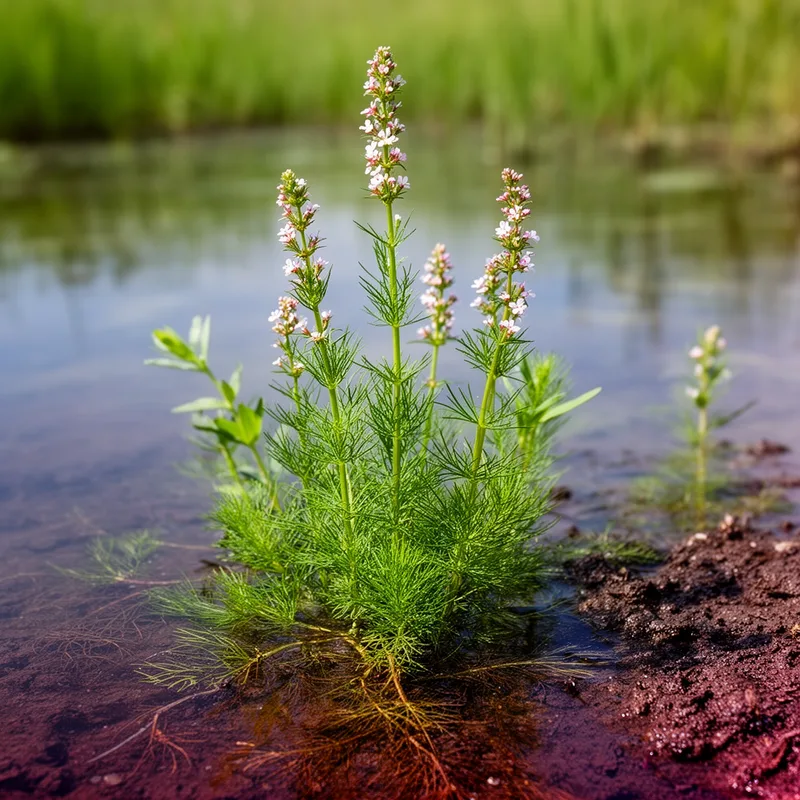
Haloragaceae
- noun
- Specialized
- The Haloragaceae family includes both aquatic and terrestrial species found worldwide.
Examples
-
Some members of the Haloragaceae can be invasive in freshwater habitats.
-
The Haloragaceae family is known for its water milfoils and other aquatic plants.
-
Botanists have debated the classification of Haloragaceae within the order Myrtales.
-
The Haloragaceae family includes several aquatic species.
-
Have you studied the Haloragaceae family of plants?
-
Many species in the Haloragaceae family thrive in marshy environments.
-
Researchers are exploring the ecological roles of Haloragaceae in freshwater ecosystems.
Synonyms

A group of water plants that live in or near freshwater

A family of flowering plants that live in water or wet places like water milfoil
Surface Forms
Etymology
Haloragaceae comes from the Greek element halo- meaning 'sea' or 'salt' and the ending -aceae meaning 'family'. A helpful way to remember it is that many plants in this family live in water or marshes, so the 'halo-' part points to wet, often salty places and -aceae tells you it is a plant family.

