
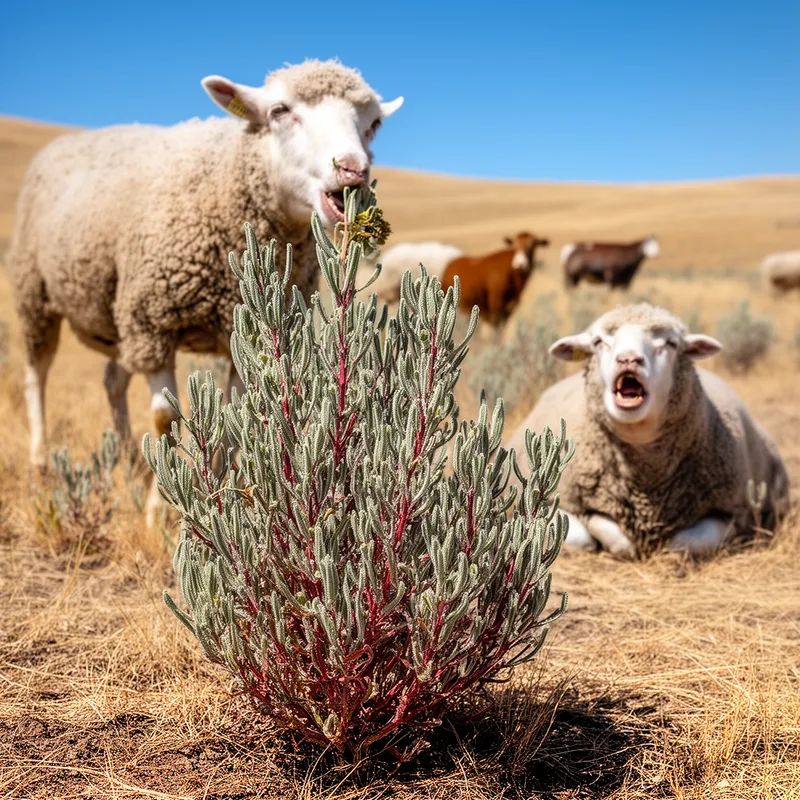
Halogeton glomeratus
- noun
- Specialized
- Sheep can suffer kidney damage after grazing in areas dense with Halogeton glomeratus.
Examples
-
Halogeton glomeratus has invaded many western rangelands, creating serious problems for ranchers and their livestock.
-
The spread of Halogeton glomeratus is often linked to overgrazing and poor land management practices.
-
Farmers should be cautious of Halogeton glomeratus in their pastures.
-
The Halogeton glomeratus plant can be harmful to livestock.
-
Halogeton glomeratus poses a significant threat to sheep and cattle due to its toxic oxalate content.
-
Ranchers have reported cases of livestock becoming ill after grazing on Halogeton glomeratus.
-
To prevent health issues in animals, it is important to manage areas where Halogeton glomeratus grows.
Synonyms
A rough annual plant that is toxic to sheep and cattle
Surface Forms
Morphology
halogeton + glomeratus
This is a scientific Latin binomial (a species name) rather than a compositional English phrase; species names function as labels and do not transparently convey the detailed meaning (coarse annual herb with high oxalate toxic to grazing animals). One constituent ('glomeratus') is not a common English word and provides no predictable semantic contribution for a B1 learner, so the overall meaning cannot be derived from the parts.
Etymology
Halogeton glomeratus comes from words meaning 'salt' and 'clustered': Halogeton points to a plant that grows in salty, dry soil and glomeratus means 'bunched' or 'ball-like'. The name gives a clear picture of a rough, salt-loving herb with tight clusters, and today it is known for a chemical called oxalate that can be 'dangerous to grazing animals' such as sheep and cattle.

