
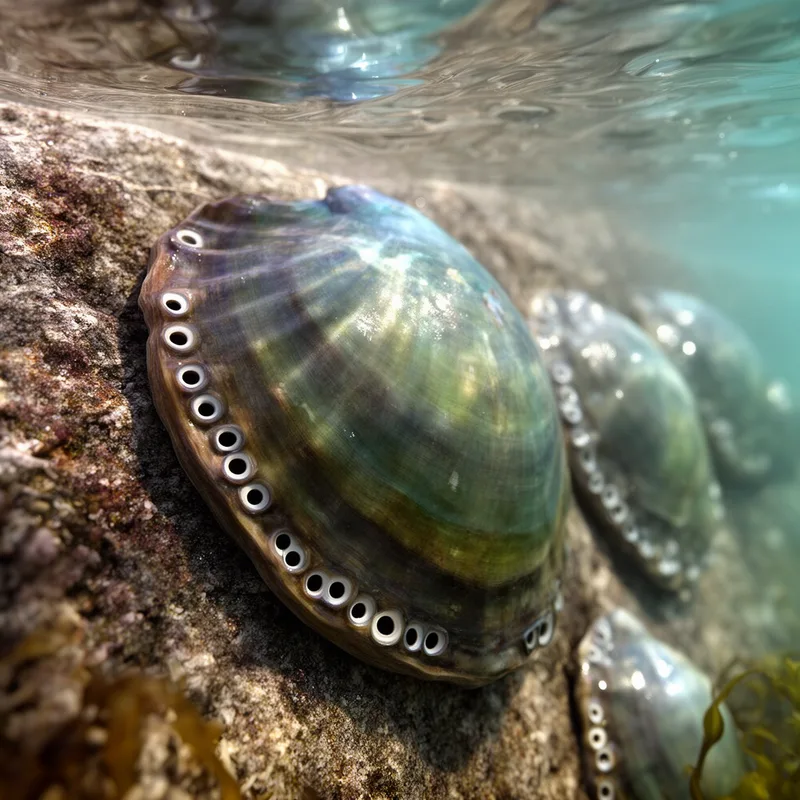
Haliotidae
- noun
- Specialized
- The Haliotidae family includes various species of abalones.
Examples
-
Marine biologists study Haliotidae to understand their ecological role in coastal environments.
-
The Haliotidae family includes species valued for their colorful shells and edible flesh.
-
Collectors often seek out rare shells from the Haliotidae family.
-
Did you know that Haliotidae are often harvested for food?
-
Many chefs consider Haliotidae a delicacy due to their tender and flavorful meat.
-
The shiny, ear-shaped shells of Haliotidae attract both collectors and marine enthusiasts.
-
In coastal regions, Haliotidae play a vital role in the marine ecosystem as herbivores.
Synonyms
A group of sea snails with ear-shaped shells called abalones
Compounds
Surface Forms
Morphology
Haliotidae = Haliotis (opaque) = Haliotis + idae
Although formed by the genus name 'Haliotis' plus the taxonomic suffix '-idae', both elements are technical/scientific and unfamiliar to an average B1 learner, so the meaning cannot be derived from the parts.
Etymology
Haliotidae comes from the Greek word haliotis, which means 'sea ear' because abalone shells look like little ears, and the ending -idae is the family name for groups of animals, so Haliotidae is the family of those ear-shaped sea snails.

