

Hagia Sophia
- proper noun
- /ˈhɑːɡiə soʊˈfiə/
- As a former cathedral, mosque, and now a museum, the Hagia Sophia represents centuries of cultural transformation.
Examples
-
The mosaics inside the Hagia Sophia are celebrated masterpieces of Byzantine art.
-
When traveling to Istanbul, many tourists put the Hagia Sophia at the top of their itinerary.
-
The Hagia Sophia attracts millions of visitors each year due to its architectural beauty and storied history.
-
The Hagia Sophia is an architectural marvel.
-
Did you visit the Hagia Sophia during your trip?
-
The Hagia Sophia is known for its stunning dome and rich history, drawing visitors from around the world.
-
Many people visit the Hagia Sophia to admire its impressive mosaics and architectural features.
Synonyms

A 6th-century building in Istanbul first used as a church and later as a mosque and a museum

A large historic building in Istanbul that was a church, then a mosque, and now a museum
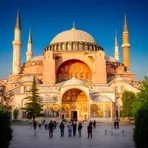
A large old building in Istanbul that was a church, later a mosque, and now a museum
Surface Forms
Morphology
Hagia + Sophia
The phrase literally derives from Greek hagia 'holy' + sophia 'wisdom', so a learner who knows those constituents could infer a religious or sacred notion ('holy wisdom') and suspect it labels something religious. However, as a proper name for a specific historic building in Istanbul (with particular historical and architectural senses) the full referent and its cultural/historical details are not predictable from the parts alone, so it is only partially transparent.
Etymology
Hagia Sophia comes from old Greek words: Hagia means 'holy' and Sophia means 'wisdom'. The building was named for 'holy wisdom' rather than a person, so the name points to its role as a great holy place.

