

Haemoproteus
- noun
- /ˌhiːməˈproʊtiːəs/
- Specialized
- Researchers discovered Haemoproteus parasites in the blood samples of wild songbirds.
Examples
-
Did you know that Haemoproteus can be transmitted by insect bites?
-
Veterinarians studied the life cycle of Haemoproteus in captive reptiles.
-
Infections caused by Haemoproteus can affect the health of certain bird populations.
-
The Haemoproteus parasite can severely affect bird populations.
-
Infections caused by Haemoproteus can affect the health of certain bird populations.
-
Researchers discovered Haemoproteus parasites in the blood samples of wild songbirds.
-
The Haemoproteus parasites in captive reptiles can lead to significant health issues.
Synonyms
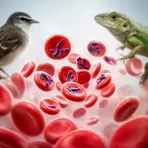
A group of very small parasites that live in the blood of birds and reptiles
Compounds
- Specialized
A group of very small parasites that live in the blood of birds and reptiles
Surface Forms
Morphology
Etymology
The word Haemoproteus comes from the parts haemo- meaning 'blood' and Proteus a name used for things that 'change form' and seen in the English word protean meaning 'changeable'. So Haemoproteus is a fitting name for a tiny parasite that lives in the blood and can change form.

