

Haematoxylon
- noun
- /ˌhiːməˈtɒksɪlən/
- Specialized
- Researchers discovered a new medicinal compound in the bark of Haematoxylon trees.
Examples
-
The Haematoxylon tree is known for its vibrant bark.
-
The dye extracted from Haematoxylon is widely used in histological staining.
-
The botanical garden features a rare Haematoxylon specimen from South America.
-
Some species of Haematoxylon are used in traditional medicine.
-
The region was a habitat for Haematoxylon, a species of small tree found in parts of the southwestern Caribbean that was most commonly used to make a black dye.
-
The trees from the Haematoxylon genus thrive in tropical climates, showcasing their resilience.
-
In tropical America, Haematoxylon species are known for their spiny branches and dense foliage.
Synonyms
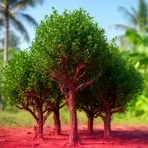
A small group of spiny, bushy shrubs or small trees from tropical America
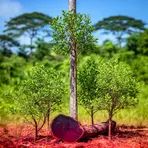
A small group of tropical American shrubs and trees like the logwood tree
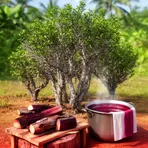
A small group of spiny bushes and small trees from tropical America with wood used for dye
Compounds
- Specialized
A small group of spiny, bushy shrubs or small trees from tropical America
Surface Forms
Etymology
Haematoxylon comes from Greek parts haema 'blood' and xylon 'wood', the same 'xylo-' you see in xylophone, because the tree's heartwood is deep red and was used as a dye. So Haematoxylon is the name for a small group of spiny shrubs and trees from tropical America known for their 'blood-coloured' wood.

