
Haematopodidae
- noun
- /ˌhiːmətəˈpɒdəˌdiː/
- Specialized
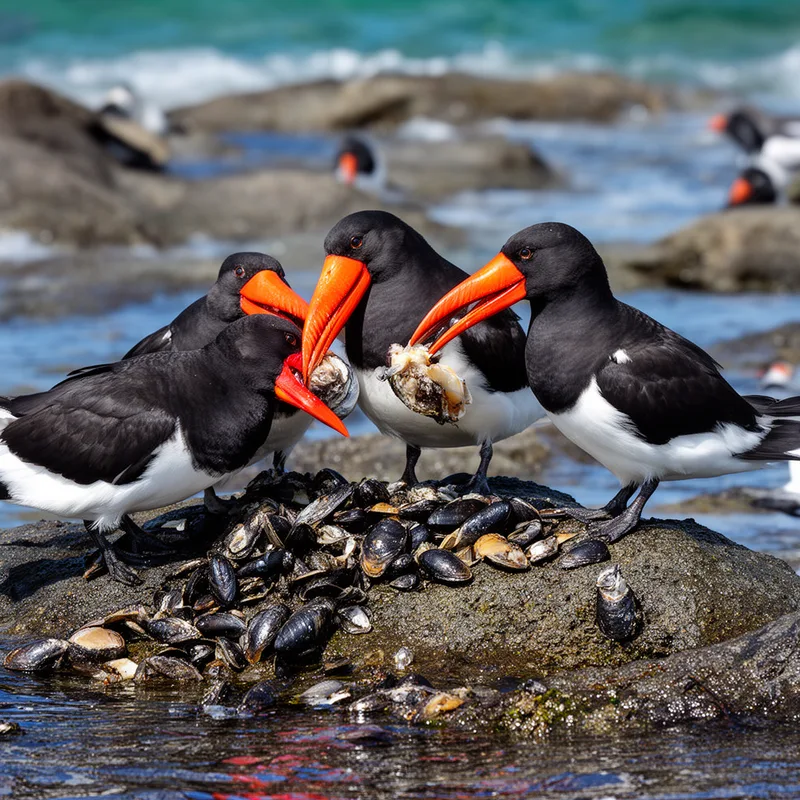
- Many species in the Haematopodidae family have adapted to life in coastal habitats, using their strong bills to open shellfish.
Examples
-
During low tide, the Haematopodidae can be seen foraging along the beach for marine invertebrates.
-
In some shorebirds, such as oystercatchers (Haematopodidae) and thick-knees (Burhinidae), the young are fed by the parents, whereas in many others the young require less care; the parents only brood them and defend them from predators.
Academic text (2006) -
The Haematopodidae family includes birds like the Eurasian oystercatcher, known for their striking black and white plumage.
Synonyms
A group of birds that live by the sea called oystercatchers with long strong bills
Surface Forms
Etymology
Haematopodidae comes from the parts haemato- meaning 'blood', pod- meaning 'foot', and -idae meaning 'family'. A helpful way to remember it is 'blood-foot family' because these oystercatchers are shorebirds with strong bills and bright red or orange legs along the coast, so the name points to this group of coastal birds.

