

HSV-1
- noun
- /ˌeɪtʃ ɛs viː ˈwʌn/
- Specialized
- Many people carry HSV-1 without symptoms.
- HSV-1 causes
Examples
-
She was diagnosed with HSV-1 last week.
-
The spread of HSV-1 can be reduced by avoiding direct contact during outbreaks.
-
Doctors often test for HSV-1 when a patient presents with cold sores.
-
Most cases of oral herpes are caused by HSV-1 infection.
-
Many people experience cold sores around the mouth due to HSV-1 infection.
-
After being exposed to HSV-1, he developed painful blisters on his lips.
-
To avoid catching HSV-1, he tried not to share drinks or utensils with others.
Synonyms

A virus that usually causes cold sores around the mouth
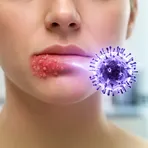
A virus that usually causes cold sores around the mouth

A virus that causes cold sores around the mouth
Surface Forms
Morphology
HSV-1 = HSV (semi-transparent) = HSV + 1
Formally HSV-1 is HSV + the type number '1', which is clear as a technical label but requires domain knowledge of the abbreviation to be meaningful to most learners.
Etymology
HSV-1 stands for herpes simplex virus type 1. A helpful way to remember it is that herpes comes from a Greek word meaning 'to creep' because the germ moves along nerves, simplex means 'single', and virus was an old word for 'poison', so HSV-1 is the 'single' herpes virus that often causes cold sores around the mouth.

