
Guy Fawkes Day
- noun
- UK
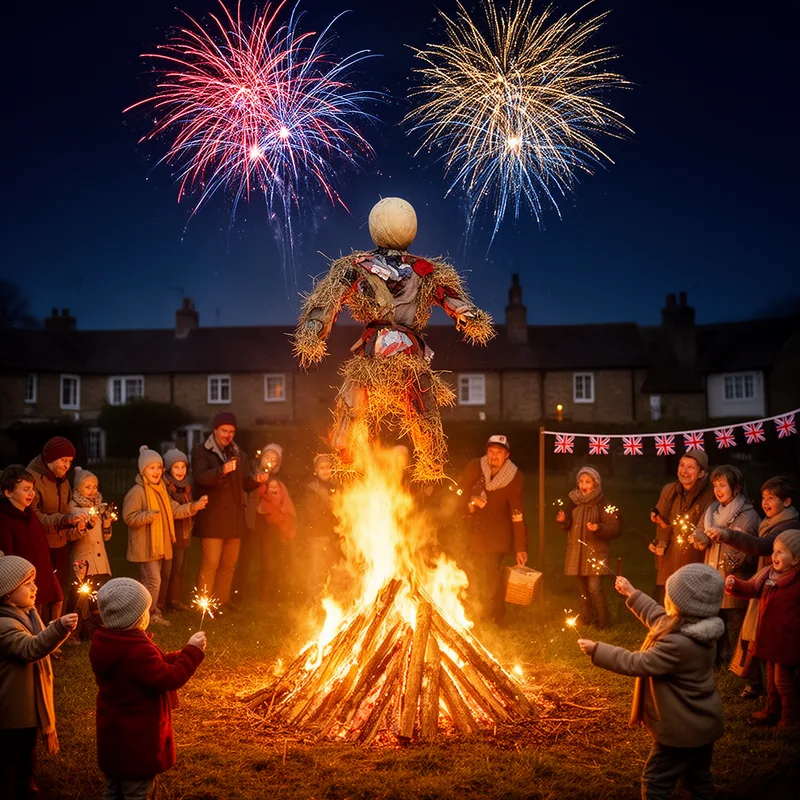
- On Guy Fawkes Day, crowds can be seen lighting bonfires and burning effigies to mark the occasion.
Examples
-
Guy Fawkes Day.
-
And that Guy Fawkes Day celebrates the dawn of British democracy, commemorating King John's first Prime Minister (who was just this guy, you know, named Fox) after signing the Magna Carta.
Blog text (8) -
Every year, families gather to watch fireworks and celebrate Guy Fawkes Day on November 5th.
-
In England, Guy Fawkes Day is a traditional festival that commemorates the foiling of the Gunpowder Plot in 1605.
Synonyms
 1
6.7
1
6.7

A yearly UK event on November 5 when people light bonfires and watch fireworks to remember the Gunpowder Plot

An annual British event on November 5 where people light fireworks and burn effigies
Surface Forms
Morphology
Guy + Fawkes + day
The phrase is the proper-name label of a specific historical and cultural festival tied to Guy Fawkes and the Gunpowder Plot; knowing the words 'guy' (or the separate name components) and 'day' does not allow a learner to infer the event commemorated or its customs. This meaning depends on background cultural/historical knowledge rather than compositional semantics, so a B1 learner would not reliably derive it from the constituents.
Etymology
Guy Fawkes Day is named after Guy Fawkes, a man who helped plan to blow up the English Parliament in 1605. When the plan failed, people lit bonfires, set off fireworks and burned a model of Guy Fawkes, and today the day is still marked by bonfires and fireworks to 'remember' that event.