
Gros Ventre language
- noun
- /ɡroʊ vɑːntr ˈlæŋɡwɪdʒ/
- The Gros Ventre language is endangered, with only a handful of fluent speakers remaining today.
Examples
-
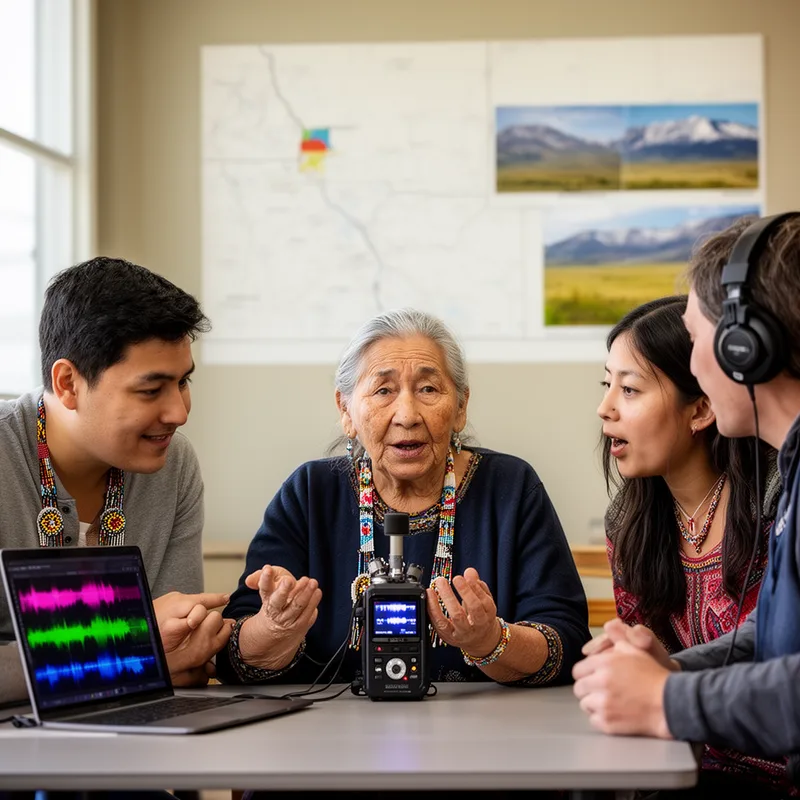
Linguists are documenting the Gros Ventre language to help preserve its unique sounds and grammar.
-
The Gros Ventre language is unique to the Atsina people.
-
He studied the Gros Ventre language as part of his research on Native American languages.
-
Many linguists study the Gros Ventre languages for their distinct features.
-
He studied the Gros Ventre language as part of his research on Native American languages.
-
Linguists are documenting the Gros Ventre language to help preserve its unique sounds and grammar.
-
The Gros Ventre language is endangered, with only a handful of fluent speakers remaining today.
Surface Forms
Morphology
Gros + Ventre + language
The phrase follows the regular compositional pattern 'X language' meaning 'the language of X'; a learner who knows 'language' and recognizes Gros Ventre as a group or name will infer it refers to the language spoken by that people. Although 'Gros' and 'Ventre' are etymologically French and their literal lexical meanings do not contribute to the linguistic sense, the overall NP is a transparent name + noun composition rather than an idiom.
Etymology
Gros Ventre language comes from a French name, Gros Ventre. In French, Gros means 'big' and Ventre means 'belly', and early French traders used that name for the people, so today Gros Ventre language means the language of the group who call themselves 'Atsina'.

