

Greek mode
- noun
- /ɡrik moʊd/
- Specialized
- The composer wrote a piece that incorporated the Greek mode, creating a unique sound inspired by ancient traditions.
Examples
-
In her music class, we learned about the Greek mode and how it influenced Western musical scales.
-
The first Christians were left-wing Jews whose musical and liturgical forms came not from the pagan Greek modes but from Jewish models.
Academic text (1990) -
Many modern composers still experiment with the Greek mode to evoke a sense of history in their compositions.
Synonyms

 10
7.0
10
7.0

A set of notes used to make a musical scale, like major or minor
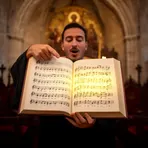
A scale of notes that musicians use in Byzantine and Greek music to make melodies

A pattern of eight notes that gives a piece of Western music its typical sound
Surface Forms
Morphology
The meaning is compositionally derived: 'Greek' specifies the cultural/origin attribute of 'mode' (a diatonic scale), so the phrase simply denotes modes associated with Greek music. This origin+noun pattern is cross-linguistically common, so a B1 learner who knows both constituents should be able to infer the MWE meaning.
Etymology
One popular story says the term Greek mode comes from ancient Greece, where musicians named different scales after regions or peoples, like Dorian or Phrygian. Each named mode was a particular pattern of notes, so today Greek mode means 'a scale' or 'a set of notes' with a special sound.