

Gram's procedure
- noun
- /ɡræmz prəˈsiːdʒər/
- Specialized
- A positive reaction in Gram's procedure indicates that the bacteria have a thick peptidoglycan cell wall.
Examples
-
The microbiologist performed Gram's procedure to identify the type of bacteria present in the sample.
-
Medical students must learn Gram's procedure during their microbiology training.
-
The lab technician performed Gram's procedure to identify the bacteria.
-
Have you ever used Gram's procedure in your experiments?
-
Medical students must learn Gram's procedure during their microbiology training.
-
The microbiologist performed Gram's procedure to identify the type of bacteria present in the sample.
-
A positive reaction in Gram's procedure indicates that the bacteria have a thick peptidoglycan cell wall.
Synonyms

 1
5.1
1
5.1

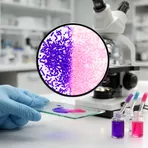
A lab test that uses dyes and a microscope to show if bacteria keep a purple colour
 1
4.8
1
4.8
A lab method that uses dye to show whether bacteria keep or lose the dye

A way to stain bacteria with purple dye to tell them apart
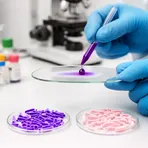
A lab method to tell types of bacteria by staining them to see if they keep a purple dye
Surface Forms
Morphology
Gram's + procedure
This is an eponymic phrase: a B1 learner who knows 'Gram's' as a possessive form and 'procedure' will understand it denotes a method associated with someone named Gram, so the general category (a procedure) is transparent. However, the specific sense — a particular bacterial staining/classification technique — is specialized domain knowledge not derivable from the constituents alone, so full meaning requires prior exposure.
Etymology
Gram's procedure is named after the scientist Hans Christian Gram, who found a way to stain bacteria so they show different colors. Because the stain makes some bacteria turn purple and others pink, doctors can tell 'Gram-positive' from 'Gram-negative', so the name now means the common lab test for classifying bacteria.