
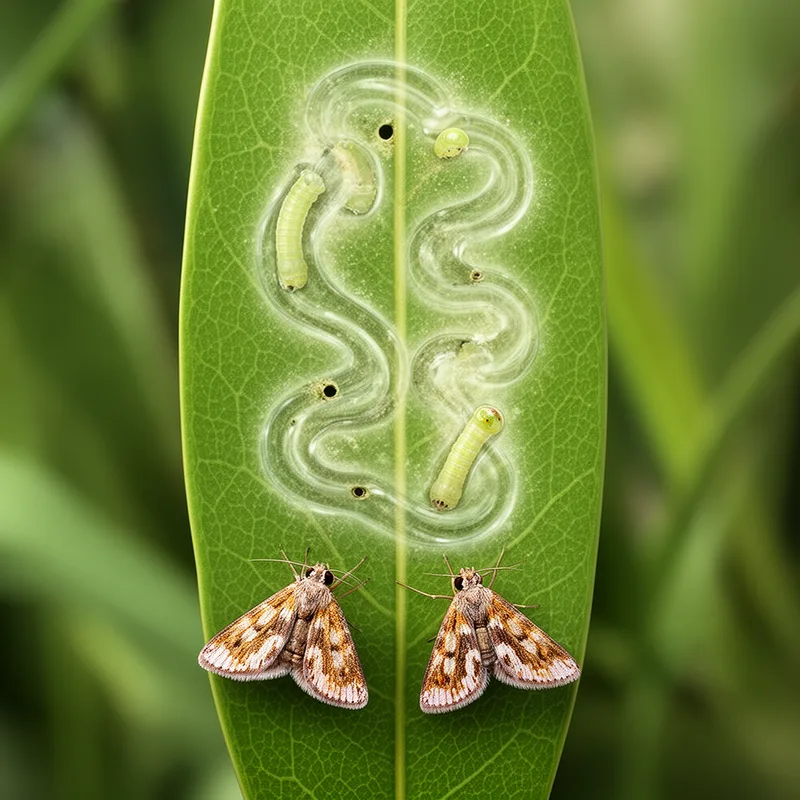
Gracillariidae
- noun
- /ˌɡræsɪˈlɛrɪˌaɪdi/
- Specialized
- Many agricultural scientists study the Gracillariidae because of the damage their leaf-mining larvae can cause to crops.
Examples
-
The Gracillariidae family includes many species of leaf-mining moths.
-
The Gracillariidae family contains over 2,000 species of small moths found worldwide.
-
Larvae of Gracillariidae create winding tunnels visible on the leaves of their host plants.
-
Have you ever seen a Gracillariidae moth in your garden?
-
The larvae of Gracillariidae often leave unique patterns on the leaves they feed on.
-
Farmers are concerned about Gracillariidae because their larvae can severely damage crops.
-
Researchers documented over a thousand species in the Gracillariidae family across various regions.
Synonyms

A family of small moths whose caterpillars make tunnels inside leaves
A group of small moths whose caterpillars live and eat inside leaves
Surface Forms
Morphology
Gracillariidae = Gracillaria (opaque) = gracillari + idae
Formed by a taxonomic suffix '-idae' attached to a genus name; the family meaning is a technical biological formation unfamiliar to typical learners.
Etymology
Gracillariidae comes from the Latin gracilis meaning 'slender' and the scientific ending -idae meaning 'family'. So the name means a 'family of slender' moths, which fits because these are very small moths whose young live and feed inside leaves.

