

Gnathostomata
- noun
- /næθəˈstɑːmətə/
- Specialized
- The Gnathostomata include most vertebrates, with exceptions such as lampreys and hagfish.
Examples
-
In biology class, we learned that humans are members of the Gnathostomata.
-
Many Gnathostomata exhibit complex jaw structures.
-
Fossil records show that Gnathostomata first appeared during the Silurian period.
-
The Gnathostomata group includes various species of fish.
-
Fossil records show that Gnathostomata first appeared during the Silurian period.
-
In biology class, we learned that humans are members of the Gnathostomata.
-
The Gnathostomata include most vertebrates, with exceptions such as lampreys and hagfish.
Synonyms
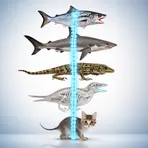
An animal with a backbone and true jaws, like mammals, birds, reptiles, and most fish
Surface Forms
Morphology
Gnathostomata = gnathostome (opaque) = gnath + stoma + ata
The relation gnathostome -> Gnathostomata is a regular taxonomic pluralization, but the base 'gnathostome' is a specialist term built from Greek combining forms that many learners will not recognise.
Etymology
Gnathostomata comes from Greek parts gnath- meaning 'jaw' and -stoma meaning 'mouth'. So Gnathostomata names the group of animals that have both upper and lower jaws and a mouth, like most fish, amphibians, reptiles, birds, and mammals.

