
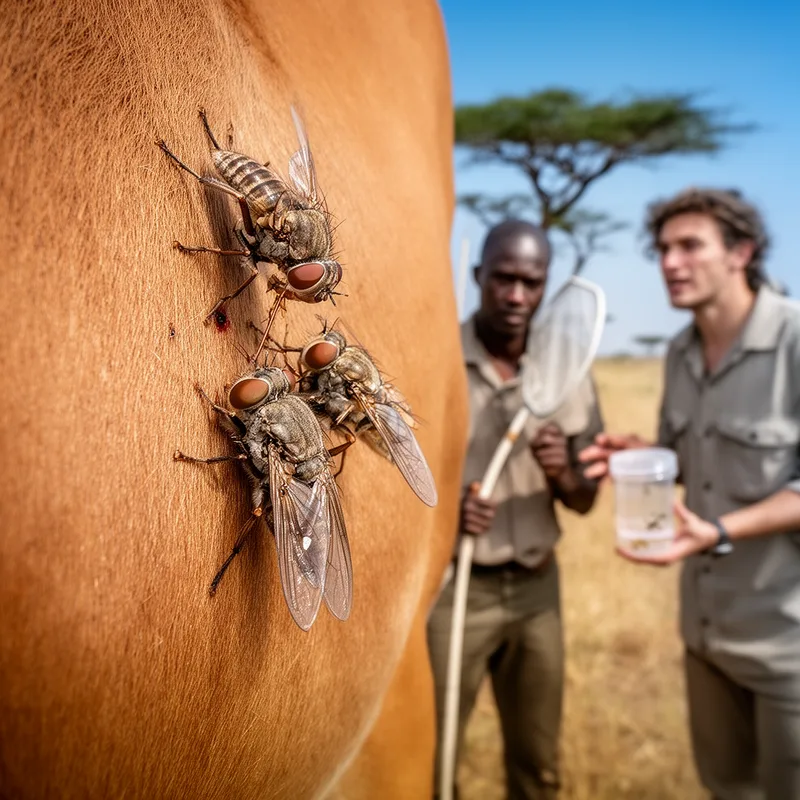
Glossinidae
- noun
- /ɡlɒsɪˈniːdeɪ/
- Specialized
- Members of the Glossinidae are responsible for transmitting African trypanosomiasis, also known as sleeping sickness.
Examples
-
The family Glossinidae includes several species of tsetse flies.
-
Research on Glossinidae focuses on controlling the spread of disease in sub-Saharan Africa.
-
The larvae of Glossinidae develop differently compared to those of other common flies.
-
Many researchers study Glossinidae to understand disease transmission.
-
The family of Glossinidae contains the infamous tsetse flies, which are pivotal in spreading diseases like sleeping sickness in Africa.
-
Researchers are investigating Glossinidae to find new methods to combat the diseases they transmit.
-
In Africa, the Glossinidae family is vital for studying the ecological impact of disease transmission among livestock.
Surface Forms
Morphology
Glossinidae = Glossina (opaque) = Glossina + idae
The formation uses the Latin scientific family suffix '-idae' added to the genus name 'Glossina', which is specialized technical morphology unfamiliar to general learners.
Etymology
Glossinidae comes from the scientific name Glossina, which comes from the Greek glossa meaning 'tongue' because tsetse flies have a long, tongue-like mouthpart. The ending -idae is the common family ending for animal groups, as in Canidae for dogs, so Glossinidae is the 'tongue' family of flies.

