
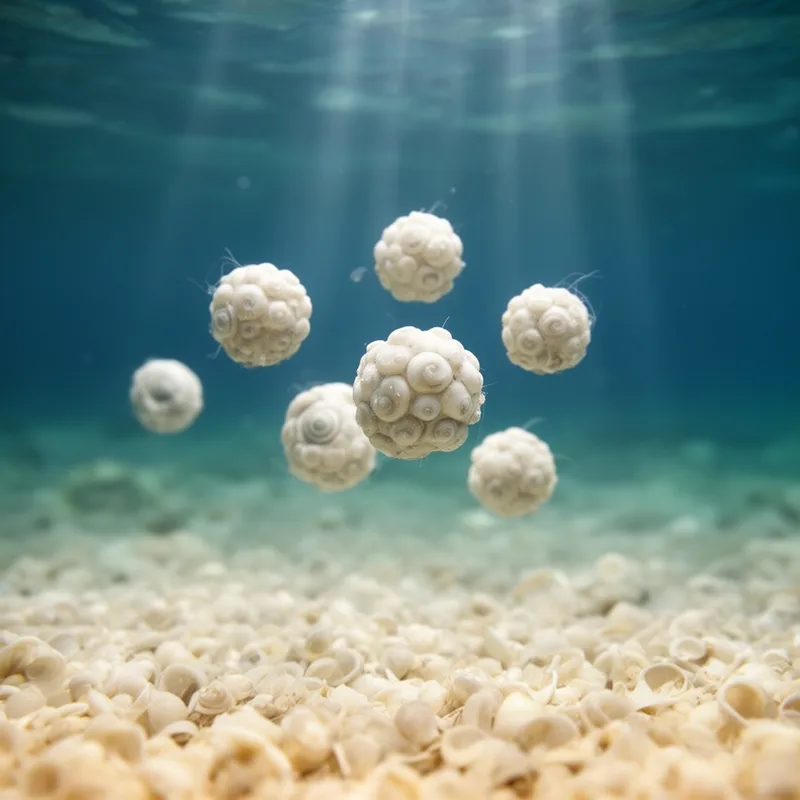
Globigerina


 1
9.9
- noun
- /ɡloʊˈbɪdʒərɪnə/
- Specialized
- The Globigerina species are crucial for studying ocean health.
Examples
-
The shells of Globigerina contribute significantly to the sediment known as globigerina ooze.
-
Many ocean-floor sediments are made up of the remains of Globigerina.
-
Scientists study Globigerina fossils to understand past climate changes.
-
Many scientists study the Globigerina to understand climate change.
-
Scientists study the shells of Globigerina to understand past ocean conditions.
-
Researchers found that Globigerina populations are decreasing due to climate change.
-
Coccoliths are produced by marine algae and are accumulating today (along with modern types of Globigerina) at the bottom of the Atlantic Ocean.
Synonyms
A tiny sea animal with a round hard shell that becomes a fossil
Surface Forms
Etymology
Globigerina comes from Latin parts globus meaning 'globe' and gerere meaning 'to carry', so it literally says 'globe-bearer'. These are tiny sea creatures with many round shells, and their shells help make ocean mud, which is why scientists study Globigerina to learn about the past.