
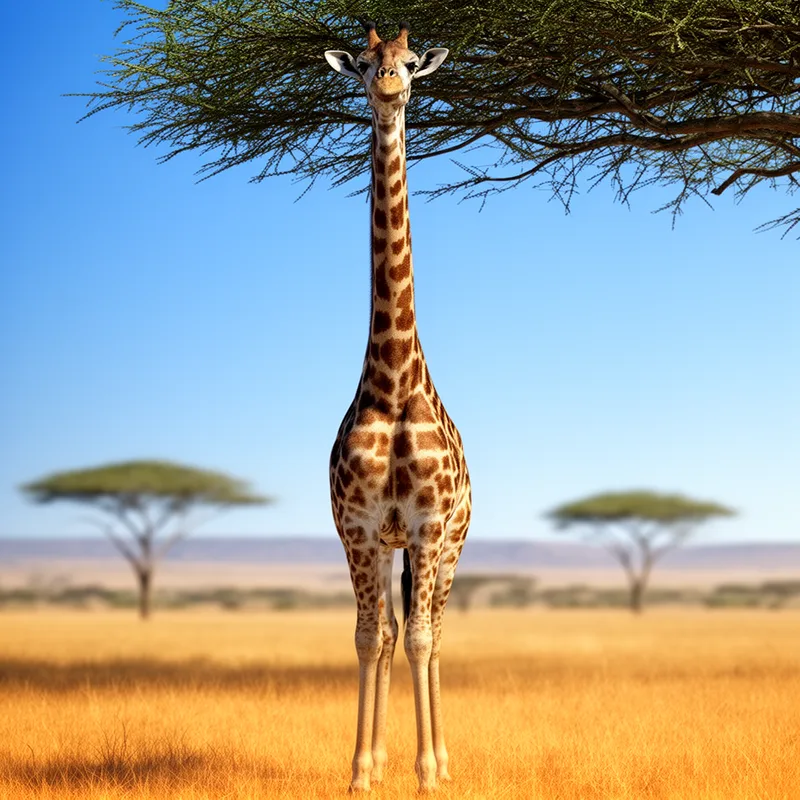
Giraffa camelopardalis
- noun
- /dʒɪˈræfə kæˌmɛləˈpɑrdəlɪs/
- Specialized
- The Giraffa camelopardalis is recognized for its remarkably long neck, which helps it reach leaves high up in trees.
Examples
-
Did you know that the Giraffa camelopardalis can grow up to 18 feet tall?
-
Wildlife documentaries often focus on the Giraffa camelopardalis as an iconic species of the African savannah.
-
Researchers monitored several Giraffa camelopardalis to study their migration patterns during the dry season.
-
The Giraffa camelopardalis is known for its incredible height.
-
Researchers monitored several Giraffa camelopardalis to study their migration patterns during the dry season.
-
The Giraffa camelopardalis is recognized for its remarkably long neck, which helps it reach leaves high up in trees.
-
Wildlife documentaries often focus on the Giraffa camelopardalis as an iconic species of the African savannah.
Synonyms
 64
1.0
64
1.0

A very tall African animal with a long neck and spots that eats leaves from trees

An old name for the giraffe

A tall African animal with a very long neck and spotted fur
Surface Forms
Morphology
Both morphemes directly reference the animal: 'Giraffa' denotes the genus and 'camelopardalis' is an older term for the giraffe, so a learner who knows those constituent meanings can infer this is the species' scientific name. Scientific binomial names are compositional and used cross-linguistically, making the overall meaning transparent to someone familiar with the parts.
Etymology
Giraffa camelopardalis comes from old names that called the animal a 'camel-leopard' because people thought it mixed a camel's long neck and a leopard's spots, and the parts Giraffa and camelopardalis reflect that image. So the scientific name points to the tall, spotted animal we call the giraffe today.