
Giotto
 2
9.3

- proper noun
- /dʒiˈɑːtoʊ/
- When Pope Benedict asked Giotto to prove his worth as an artist. . . . . .Giotto drew a perfect circle. . . . . .freehand.
- Giotto di Bondone
- Giotto's frescoes
- Cimabue and Giotto
Examples
-
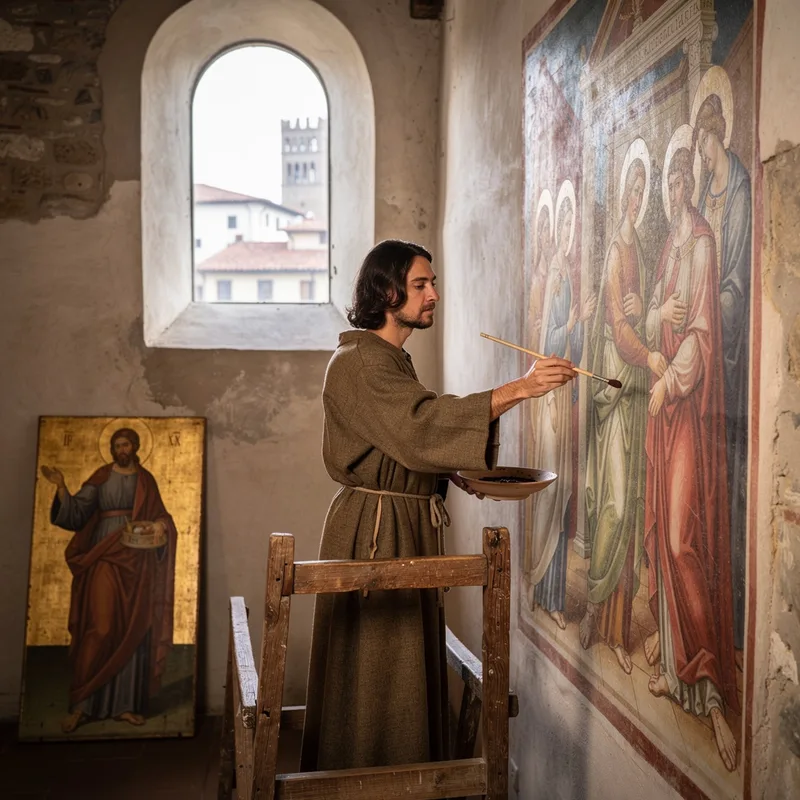
You see here these superb frescoes by Giotto, depicting the life of St Francis.
-
His friend Boccaccio said of Giotto that he brought back the light.
-
Beneath images of the lives of the Virgin and Christ, Giotto painted personifications of vice and virtue.
Academic text (2001) -
One day, the greatest Florentine painter Cimabue discovered Giotto drawing pictures of his sheep on a rock.
Blog text (15) -
Cimabue was astounded and asked Giotto's father if he could take Giotto on as his apprentice.
Blog text (15) -
You may observe here in the Peruzzi Chapel, as well as in the place from which we've been expelled, the special character of Giotto among the great painters.
-
See how Nicola and Giovanni Pisano in sculpture and Giotto and Duccio in painting resuscitate the tradition in the 1300s.
Academic text (2010) -
Giotto is celebrated for his profound influence on the development of Giotto painting.
-
Many art historians consider Giotto to be the precursor to the Renaissance due to his innovative techniques.
-
The frescoes created by Giotto in the Scrovegni Chapel are among his most famous works.
Synonyms

 1
9.8
Italian painter from Florence who painted in a more natural, emotional style that influenced later artists
Surface Forms
Etymology
The name Giotto comes from old Italian and began as a personal nickname. A helpful way to remember it is that Giotto is the single name of the famous Florentine painter who started a more natural painting style, so the name now stands for that artist and his work.