
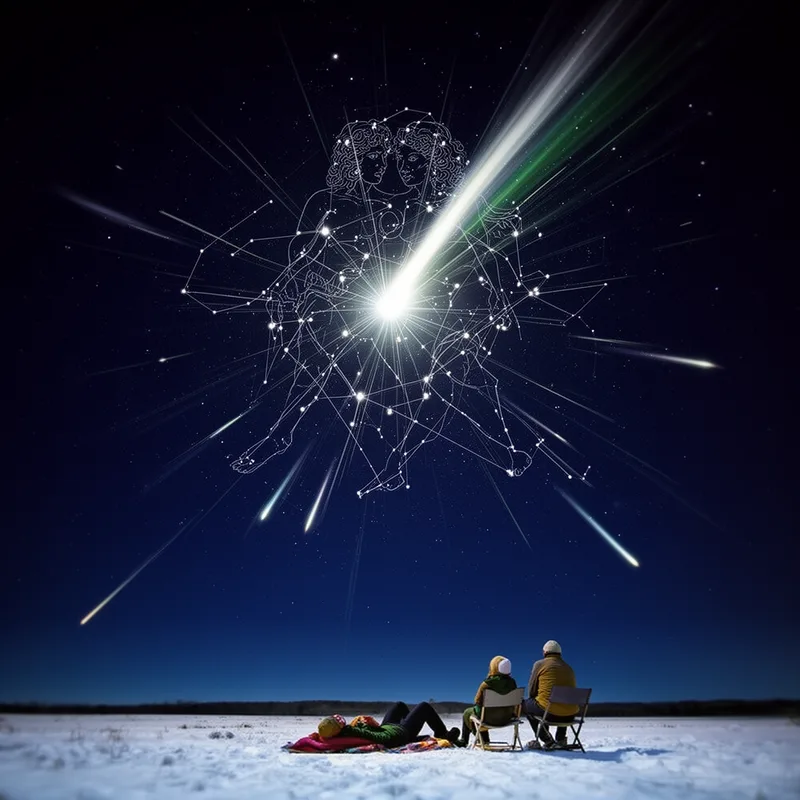
Geminid


 1
9.0
- noun
- /ˈdʒɛmɪnɪd/
- The traditional favorite, the Geminid shower, occurs in mid-December.
- Geminid meteor shower
- Geminid meteor
- Geminid peak
Examples
-
In their excitement over the Geminids, meteor fans have neglected the Ursid shower.
Academic text (1994) -
The Perseids, which peak around August 12th each year, are probably the best-known meteor shower, with the Geminids in December and November's Leonids running a close second and third.
Academic text (1992) -
You won't want to miss the Geminid meteor shower this year.
Academic text (2004) -
Then finally in the of December, we have the Geminids meteor shower, which is one of the best of the year, Invisible worldwide.
-
That number jumps when the Geminids peak on the night of December 14/15.
Academic text (2007) -
One of the most reliable showers, the Geminids peak on the night of December 13/14, just two days past New Moon.
Academic text (2004) -
Editor's note: This year, the Geminids peak at 7 p.m. PST on Dec. 13.
Academic text (1994) -
The Geminids can produce up to 120 meteors per hour under the darkest skies.
Academic text (2006) -
Geminid meteor shower peaks.
Academic text (2007) -
Every December, people gather to watch the spectacular display of the Geminid meteor shower.
Synonyms
 155
4.1
A small rock from space that burns up as a bright streak in the sky
 25
2.6
A bright streak of light in the night sky when a small rock from space burns up
 1
7.9
A meteor seen in the Perseid meteor shower in August
 1
9.9
A meteor from the November shower that appears near the group of stars called Taurus
 1
9.9
A meteor shower that appears to come from the group of stars called Aquarius
 1
9.9
A meteor from the Draconids shower that appears to come from the group of stars called Draco
Surface Forms
Morphology
Etymology
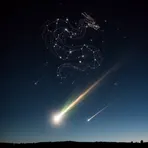
The word Geminid comes from the group of stars called Gemini, the zodiac sign whose Latin name gemini means 'twins'. A Geminid is a meteor from the annual Geminid shower, and it is called that because the meteors seem to come from the 'twins' area of the sky.