
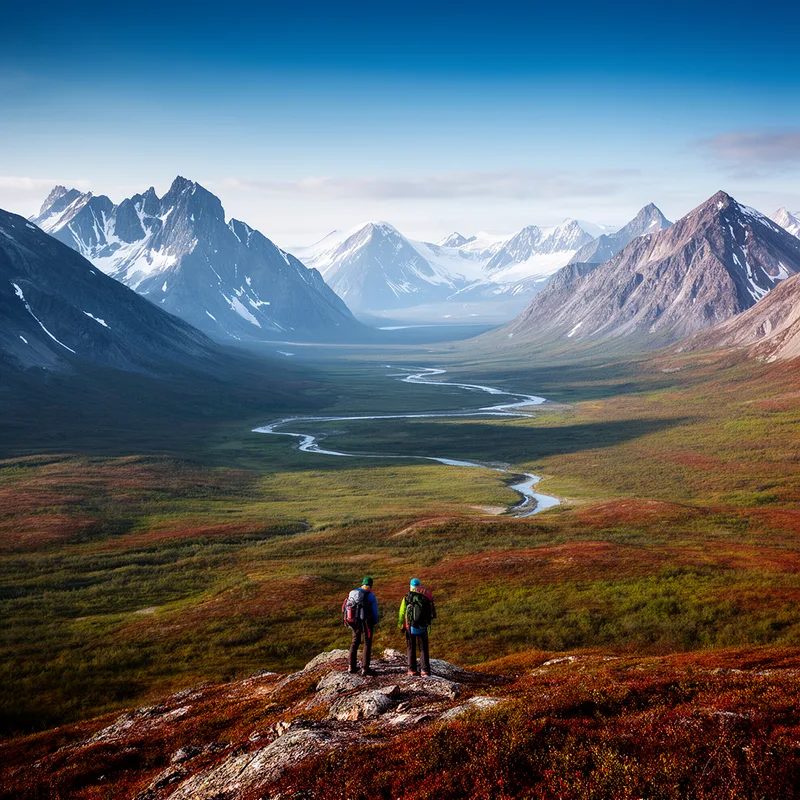
Gates of the Arctic National Park and Preserve
- proper noun
- Visiting Gates of the Arctic National Park and Preserve requires serious preparation due to its isolation.
Examples
-
Researchers studied the effects of climate change within Gates of the Arctic National Park and Preserve.
-
Few places are as remote and wild as Gates of the Arctic National Park and Preserve.
-
The Gates of the Arctic National Park and Preserve is a breathtaking place to visit.
-
Have you ever been to the Gates of the Arctic National Park and Preserve?
-
The Gates of the Arctic National Park and Preserve offers stunning views of untouched wilderness.
-
Many hikers dream of exploring the vast landscapes of Gates of the Arctic National Park and Preserve.
-
In Gates of the Arctic National Park and Preserve, wildlife thrives in its natural habitat.
Synonyms
A very large park in northern Alaska with wild land and no roads
Surface Forms
Morphology
Gates + of + the + Arctic + national + Park + and + preserve
This is a place name built compositionally from familiar parts: 'Gates' + 'of the Arctic' describes a feature/location and 'National Park and Preserve' explicitly signals a protected area. A B1 learner who knows the constituent words will readily infer it refers to a protected park area in the Arctic rather than an idiomatic or unpredictable meaning, and the naming pattern is cross-linguistically common.
Etymology
Gates of the Arctic National Park and Preserve gets its name from the land: deep river valleys and mountain passes that look like natural gates into the cold Arctic north. One popular story says early explorers saw these doorways and called the area the 'entrance to the Arctic', which fits its meaning as a very remote, wild park.

