
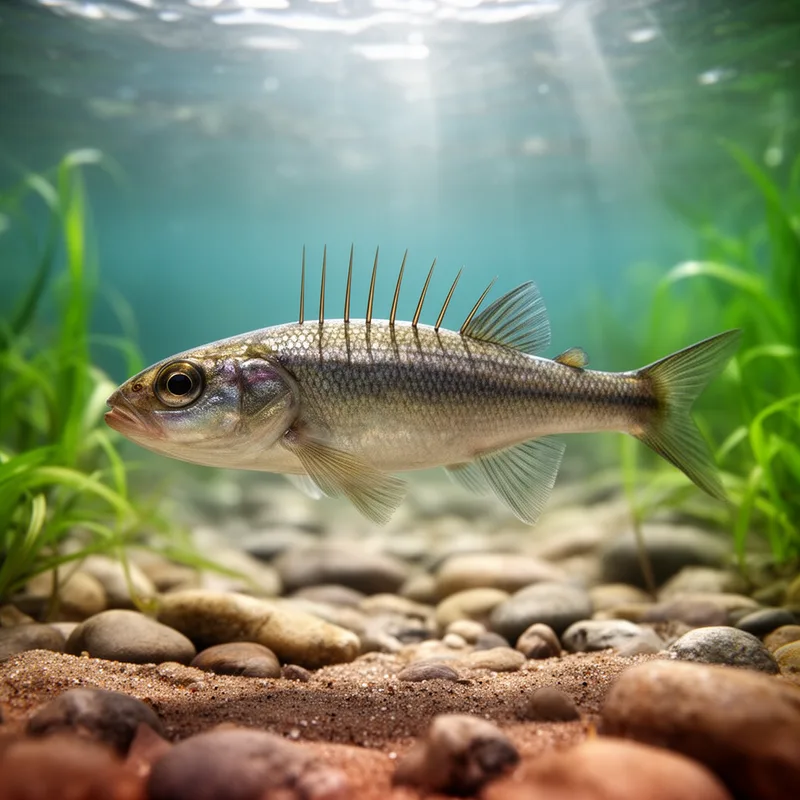
Gasterosteus pungitius
- noun
- Specialized
- The Gasterosteus pungitius thrives in slow-moving streams with abundant vegetation.
Examples
-
The population of Gasterosteus pungitius has declined in some areas due to habitat pollution.
-
Researchers studied the breeding habits of Gasterosteus pungitius in different river systems.
-
The Gasterosteus pungitius is often found in shallow waters.
-
Have you ever seen a Gasterosteus pungitius in the wild?
-
Researchers studied the breeding habits of Gasterosteus pungitius in different river systems.
-
The Gasterosteus pungitius thrives in slow-moving streams with abundant vegetation.
-
The population of Gasterosteus pungitius has declined in some areas due to habitat pollution.
Surface Forms
Morphology
Gasterosteus + pungitius
The form is a Linnaean binomial: knowing 'Gasterosteus' as a fish genus allows a learner to infer the phrase refers to a species of that fish, so some basic meaning (a type of fish) is recoverable. However, the specific sense 'nine-spined stickleback' or any additional semantic content is not derivable from the species epithet 'pungitius' (which is opaque to learners), so the exact meaning is not fully predictable.
Etymology
Gasterosteus pungitius may come from old Greek and Latin words meaning 'bony belly' and 'spiny', with Gasterosteus showing the 'bony belly' and pungitius showing the 'spines'. So the name fits the small fish with sharp back spines known as the 'nine-spined stickleback'.

