
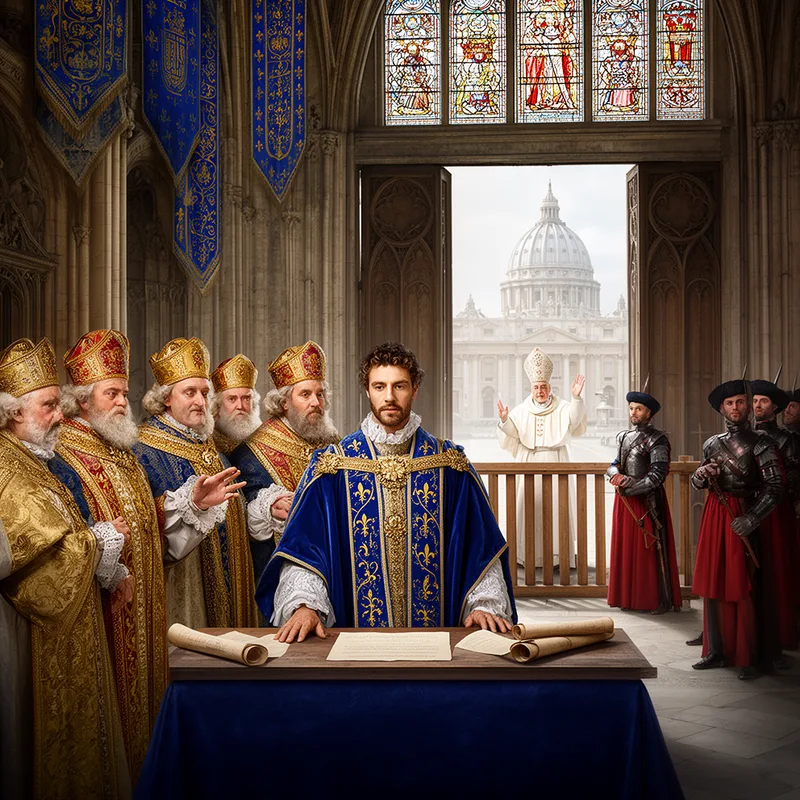
Gallicanism


 1
9.9
- noun
- /ˈɡælɪkənɪzəm/
- Specialized
- The rise of Gallicanism in France led to tensions between the monarchy and the papacy.
Examples
-
Historians debate the impact Gallicanism had on the development of French national identity.
-
Many bishops during the seventeenth century were influenced by Gallicanism and resisted papal interference.
-
The concept of Gallicanism emerged during the 17th century.
-
Many French clergy supported Gallicanism to limit papal power.
-
The council discussed the principles of Gallicanism, which aimed to limit the influence of the Pope on French affairs.
-
Many French clergy supported Gallicanism to ensure their national church had more autonomy from Roman authority.
-
During the 17th century, Gallicanism became a significant movement advocating for the independence of the French Church.
Surface Forms
Morphology
Etymology
Gallicanism comes from the Latin root Gallia, meaning 'Gaul' or 'France', and the ending -ism, meaning 'a belief or movement'. It shares the same root as Gallic, which means 'French'. So, Gallicanism is the name for a French church movement that wanted to limit the pope's power and make the national church more independent.