
Gallican


 1
9.9
- adjective
- /ˈɡælɪkən/
- Specialized
- Many worshippers appreciated the unique features of the Gallican Rite during the service.
Examples
-
Mr. Sarsfield, according to The Catholic Encyclopedia, the Gallican Rite was offered from "the earliest times until about the middle or end of the eighth century."
Blog text (21) -
You are looking at the ancient Gallican Rite.
Blog text (21) -
The Gallican Rite that the Cure offered was not the same.
Blog text (21) -
Gallican rights allowed founders the privileges of private property: to screen and lock chapels to distinguish them from the main body of the church.
Academic text (2018) -
These "Gallican Articles" were in direct continuity with the six of 1663, but they had been approved by another body, and once again the Faculty was reduced to a secondary status.
Academic text (1992) -
The Cure of Ars said the Gallican Rite, or version thereof, not the Roman Rite.
Blog text (21) -
The conflict rebounded after Louis XIV's death in 1715, signaling a deep division within the Gallican Church on matters of both doctrine and authority.
Academic text (1992) -
56 Gallican principles, which had been steadfastly maintained by the body of jurists and more pragmatically by the public administration, suddenly became the only French tradition.
Academic text (1992) -
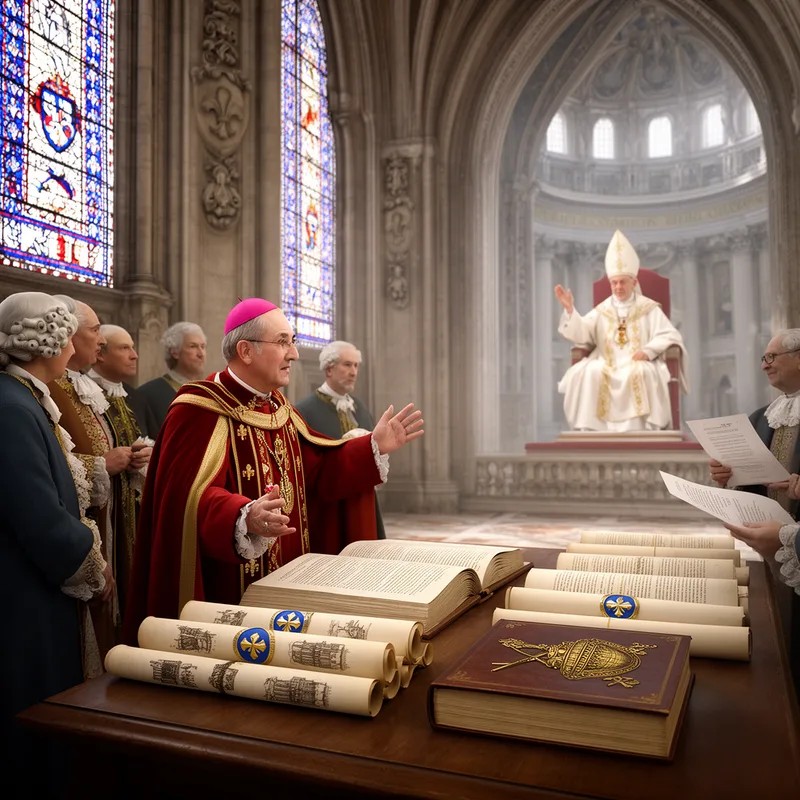
The Gallican Church followed traditions that distinguished it from the authority of the papacy.
-
The Gallican movement emphasized the autonomy of the French Catholic Church in its practices.
Surface Forms
Morphology
Etymology
Gallican comes from the Latin name Gallia, which meant 'Gaul' or the older name for France. It was used for church ideas and rules that were especially French, so Gallican now describes French church traditions or policies that were more independent of the pope.