
Gaian


 1
9.5
- noun
- /ˈɡeɪən/
- Lovelock and Margulis find a Gaian explanation in the tiny ocean phytoplankton that incorporate CO2 from the atmosphere into their calcium carbonate shells.
- Gaian framework
Examples
-
We cannot rely on the Gaian view of nature to repair the damage we cause.
Academic text (2005) -
Jen told him they were "doing penance," which he figured must mean she was a Gaian, too.
Fiction book (1990) -
What is the role of the human in the Gaian framework?
Academic text (1994) -
Is such an option viable within a Gaian framework?
Academic text (1994) -
Consider the Gaian argument for planetary-scale control of the climate.
Academic text (1991) -
To Gaian radicals, there were no "moderate" approaches to saving Earth.
Fiction book (1990) -
Many of these questions revolve around the role of the human in the Gaian schema.
Academic text (1994) -
Throughout the week, we explored the Gaian concept of the living world as a single conscious entity able to express emotions such as happiness.
Academic text (2001) -
Yet Lovelock, in ascribing a peripheral role for humanity in the Gaian framework, neglects to take into account socio-economic factors of pollution.
Academic text (1994) -
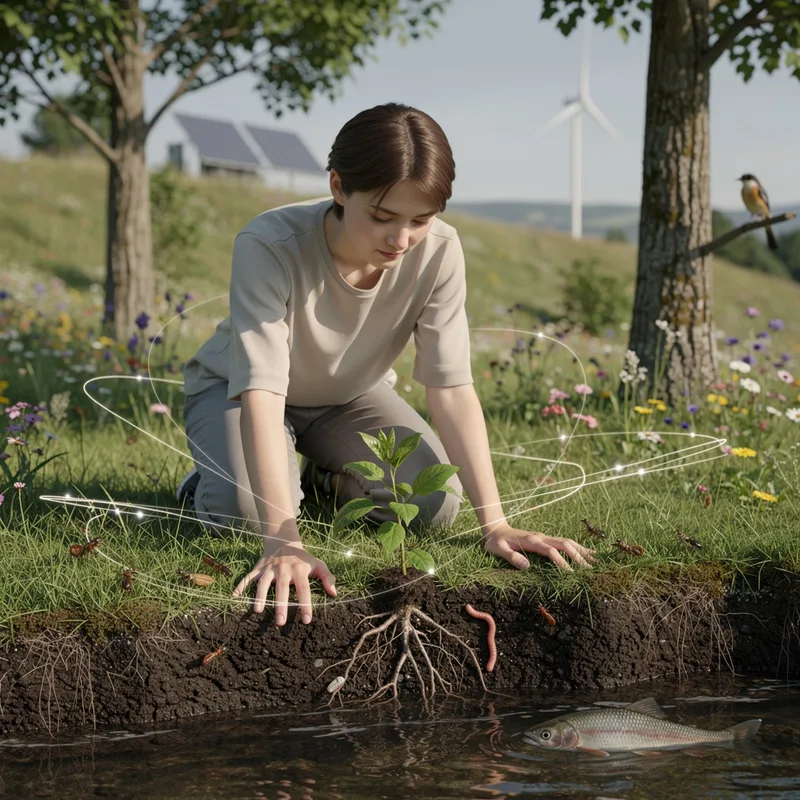
The Gaian community believes in treating the Earth as a living organism.
Surface Forms
Morphology
Etymology
Gaian as a noun comes from the name Gaia, meaning the 'earth', so a Gaian is a person who follows the idea that Earth is one 'living system' and therefore believes living things are connected and should be cared for.