
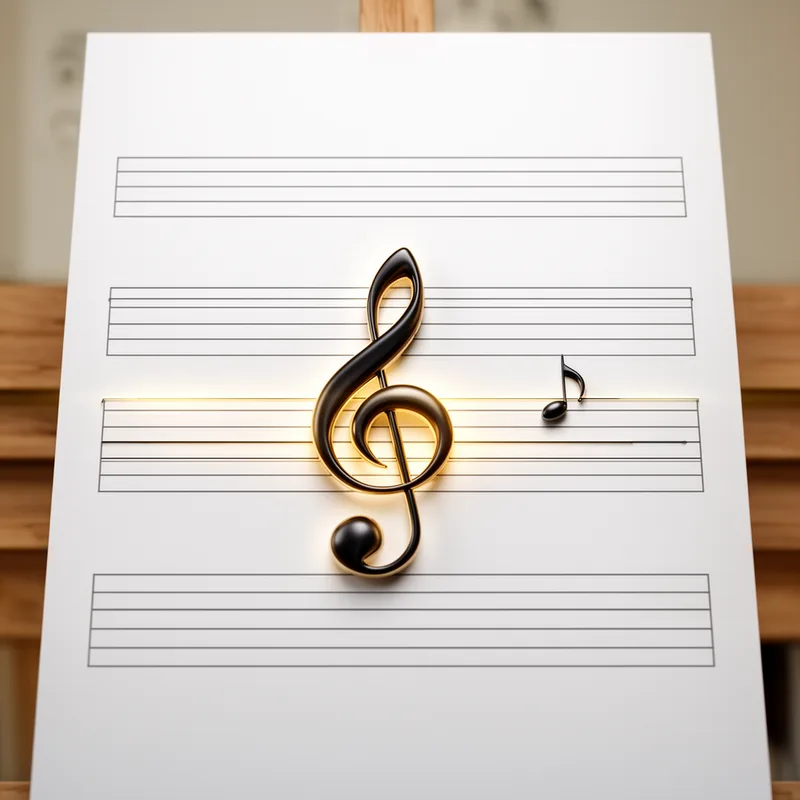
G clef
- noun
- /dʒiː klɛf/
- Specialized
 :
clave de sol
:
clave de sol
- The G clef is also known as the treble clef in many music textbooks.
Examples
-
The violin part is written in the G clef, making it easy for the player to read high notes.
-
Most beginner piano music in the right hand uses the G clef.
-
The G clef is essential for reading music.
-
Many instruments use the G clef in their notation.
-
Most beginner piano music in the right hand uses the G clef.
-
The G clef is also known as the treble clef in many music textbooks.
-
The violin part is written in the G clef, making it easy for the player to read high notes.
Synonyms

 2
7.7
2
7.7

A symbol at the start of written music that shows how high or low the notes are


 1
6.0
1
6.0
A symbol at the start of written music that shows the second line is the G above middle C
How Low

Surface Forms
Morphology
The compound is directly compositional: 'G' names a pitch/letter and 'clef' is a symbol indicating pitch, so a B1 learner who knows both can infer it is the clef that marks the pitch G on the staff. While precise technical details (e.g. which G or which line) are musical specifics, the basic meaning is transparently derived from the constituents and follows common naming patterns across languages.
Etymology
G clef may come from the old letter G written in a fancy curl that wraps around the second line of the staff. Because that curl marks the second line as the note 'G above middle C', the symbol tells musicians where to read the higher notes.