
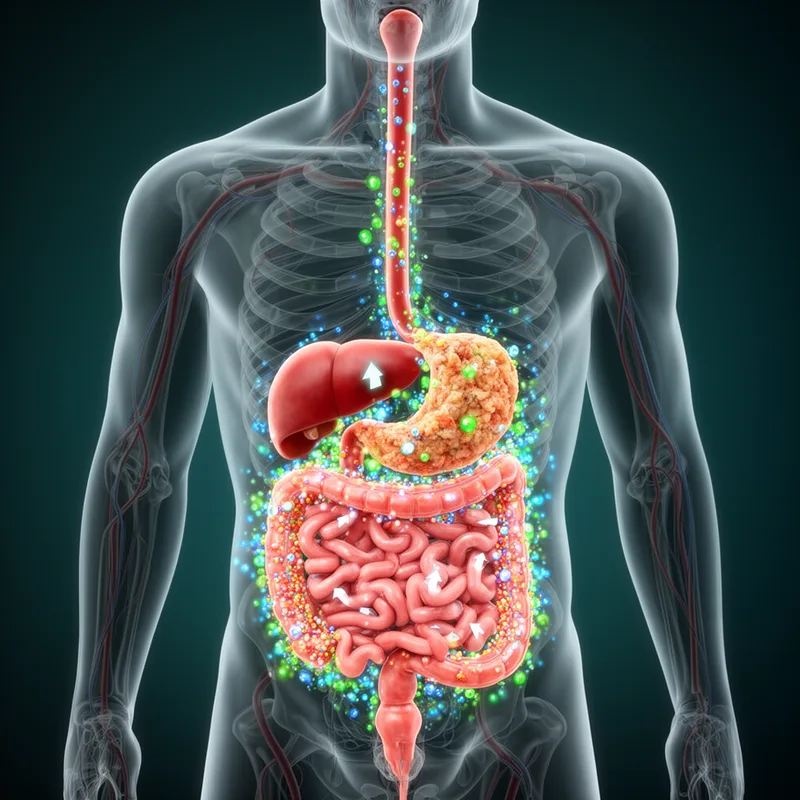
GI hormones
- noun
- Specialized
 :
hormonas gastrointestinales
:
hormonas gastrointestinales
- Scientists are studying how GI hormones affect appetite and metabolism.
Examples
-
Can you explain how GI hormones affect appetite?
-
The levels of GI hormones can influence how quickly food moves through the intestines.
-
Certain medications can impact the production of GI hormones in the digestive system.
-
The GI hormones play a crucial role in digestion.
-
Certain medications can impact the production of GI hormones that regulate digestion.
-
Scientists are studying how GI hormones influence metabolism and nutrient absorption.
-
The levels of GI hormones determine the efficiency of digestion in the gastrointestinal tract.
Synonyms

A small chemical made in the stomach and intestines that controls digestion and how food moves
Surface Forms
Morphology
This is a straightforward compositional noun phrase: 'GI' (gastrointestinal) specifies the domain of 'hormones', so the combined meaning — hormones regulating the digestive/intestinal tract — is directly derivable from the constituents. The formation follows common modifier+head noun patterns found across languages and in scientific vocabulary, so a learner who knows both words would understand it.
Etymology
GI hormones names the tiny messengers from the gut: GI means the stomach and intestines and hormones are signals the body sends. These messengers tell the body when to digest food, feel hungry, or move food along, so the phrase means 'hormones that control digestion'.

