

Fritillaria biflora
- noun
- Specialized
- Wildflower enthusiasts visited the nature reserve to photograph blooming Fritillaria biflora.
Examples
-
The rare Fritillaria biflora grew along the edge of the grassy hillside.
-
The Fritillaria biflora blooms beautifully in the spring.
-
Conservationists are working to protect habitats where Fritillaria biflora can thrive.
-
Look at that stunning Fritillaria biflora!
-
Conservationists are working to protect habitats where Fritillaria biflora can thrive.
-
Wildflower enthusiasts visited the nature reserve to photograph blooming Fritillaria biflora.
-
The rare Fritillaria biflora grew along the edge of the grassy hillside.
Synonyms
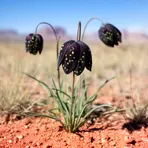
A small plant with dark purple bell-shaped flowers with green spots in the southwestern United States
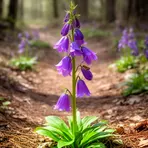
A plant with purple bell-shaped flowers that grows in North America
Surface Forms
Morphology
Fritillaria + biflora
This is a Latin binomial combining the genus name 'Fritillaria' (a flowering-plant genus) with the species epithet 'biflora'. As a scientific name the form is compositional (genus + descriptor) and hints that the second element describes a floral trait (Latin bi- + flora = 'two-flowered'), but 'biflora' is not given in the dictionary and B1 learners typically lack Latin morphology knowledge, so they can recognise it as a species name but not fully derive the detailed botanical meaning without prior exposure.
Etymology
Fritillaria biflora may come from two Latin words: Fritillaria from 'fritillus' meaning 'dice-box' because the petals often look checkered, and biflora meaning 'two-flowered' because the plant usually has two bell-shaped flowers. So the name describes its spotted bell flowers and the fact that it often has two flowers.

